
For those of us who consider ourselves fans or critics — or both — reconciling our love for cinema with the realities of the Hollywood studio system is a daily challenge. We yearn for high-quality cinema, but the truth is, we’re small fish in a big pond. The general public often craves more accessible content, and studios need to turn a profit before they can fund riskier, more ambitious projects.
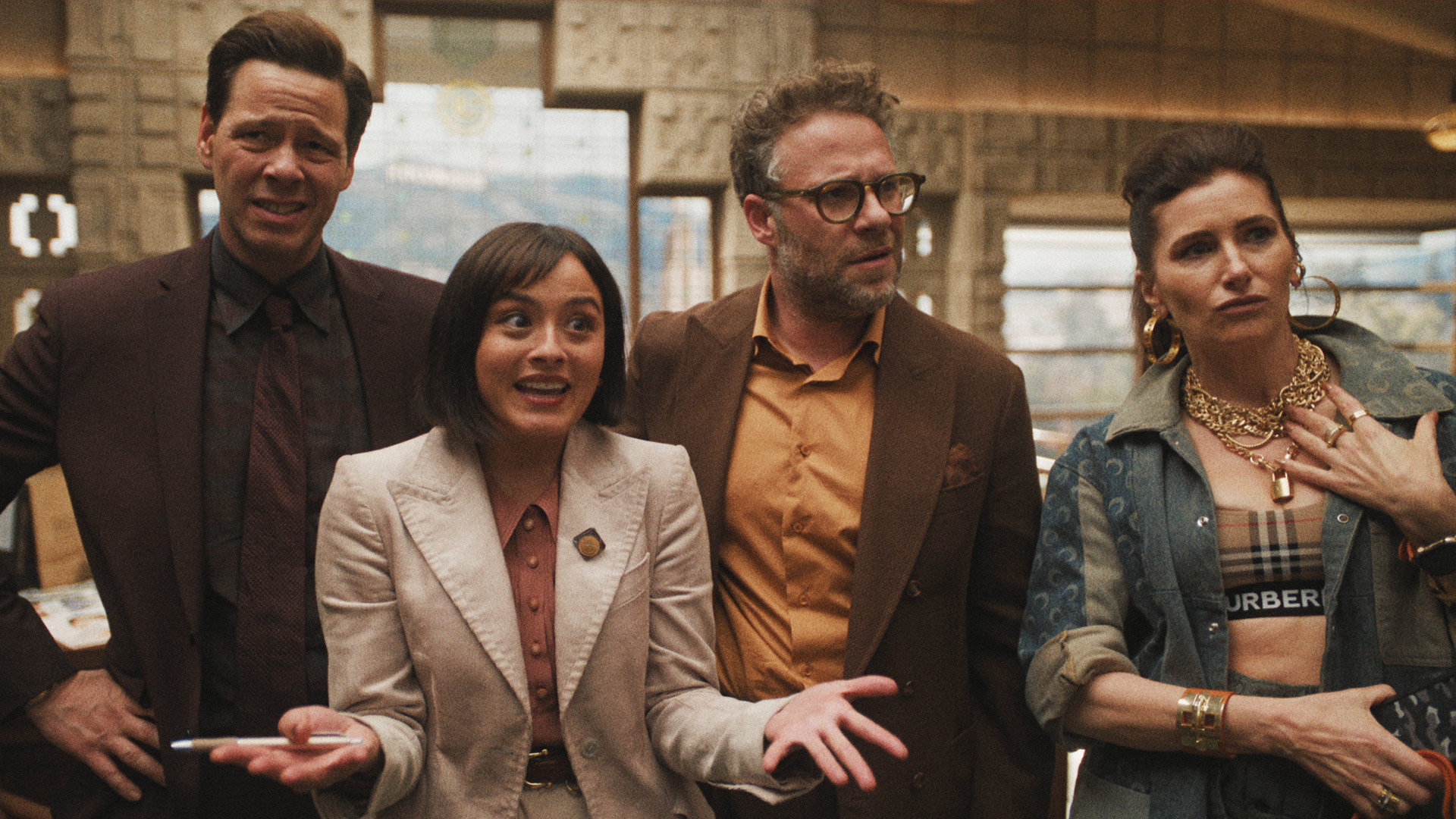
Seth Rogen and Evan Goldberg decided to write a TV Series about this very concept. In a clear nod to Robert Altman’s The Player, the series opens with a long tracking shot in which we meet Matt Remick (Seth Rogen), a film enthusiast unexpectedly promoted to Studio Head at Continental Studios. Rogen plays Remick with just the right blend of earnestness and obliviousness, making him both sympathetic and maddening — the embodiment for well-intentioned incompetence. His promotion comes from CEO Griffin Mill — played by Bryan Cranston in a deliciously old-school Hollywood performance evocative of the late Robert Evans. Mill, wary of Remick’s artistic leanings, assigns him a test: greenlight a film based on the Kool-Aid Man, to prove he can toe the commercial line. Cranston also appears in two later episodes — more on that later.
Within this first episode we see the internal conflict between film aficionado and the reality driven marketplace take root. Remick brings in Nicholas Stoller (playing himself) to helm the project. From this point on, any real-life figures portraying themselves will be referred to by name without parentheses.
Remick eventually hears that Martin Scorsese has written a script about Jonestown. Intrigued, he meets with Scorsese and pitches the idea of making a film about the Kool-Aid Man — drawing a (very misguided) connection to the infamous mass suicide at Jonestown involving poisoned Kool-Aid. As with many episodes in the series, this ill-conceived idea spirals into a total debacle, in a manner reminiscent of Curb Your Enthusiasm.
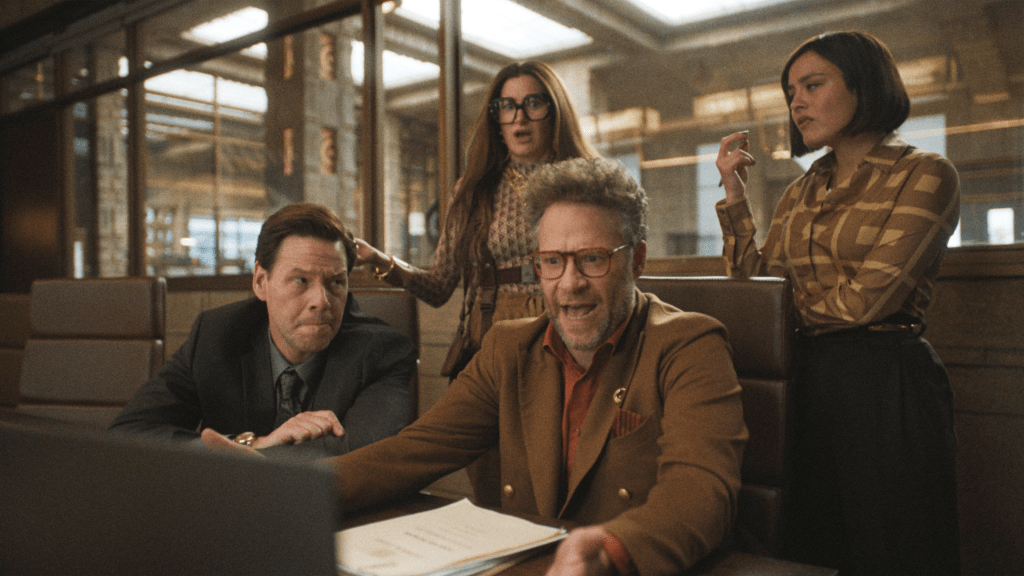
Other key characters round out the ensemble: Catherine O’Hara plays Patty Leigh, Matt’s predecessor — a figure loosely based on Amy Pascal; Ike Barinholtz is Sal Saperstein, the Vice President of Production; Chase Sui Wonders plays Quinn Hackett, Matt’s former assistant, who is promoted to Junior Executive in the first episode; and the always-great Kathryn Hahn brings sharp comic timing to her role as Maya Mason, Continental’s Head of Marketing. Hahn brings a biting wit to Mason, balancing the show’s absurdity with genuine exasperation. Catherine O’Hara, as always, finds the sweet spot between Hollywood satire and human vulnerability. And Barinholtz’s Sal is a low-key scene-stealer — energetic, weary, and hilariously over it all.
One of the strengths of The Studio is that each episode feels distinct in structure and tone. Yet, one constant remains: Matt Remick is almost always in over his head — either scrambling to contain a crisis or, just as often, causing one.
In the second episode, Sarah Polley is directing a romantic drama starring Greta Lee, aiming to capture a critical one-shot scene during the fleeting golden hour. Ironically — and impressively — the episode itself is filmed in a single continuous take. As Polley strives for perfection, Remick becomes a constant source of chaos, pestering her with unsolicited notes and repeatedly ruining the shot. His meddling — and an ill-parked car — turns the set into a farce, showcasing just how ill-equipped he is for his role.
Other episodes continue the show’s balance of satire and chaos. In one, Remick struggles to figure out how to deliver constructive criticism on a Ron Howard film — specifically a segment he personally finds dull — without causing offense. A pitch-perfect parody of Chinatown follows Remick and Saperstein on a mission to recover a missing reel from Olivia Wilde’s high-concept neo-noir. One episode zeroes in on the evolving workplace dynamic between Quinn and Sal, while another takes a more existential turn, asking whether art and cinema truly matter in the grand scheme of things — and whether filmmaking is a noble calling.
In a particularly sharp installment, the casting of the Kool-Aid Man becomes a hot-button issue. Remick and his team debate whether casting a Black actor could unintentionally echo harmful racial stereotypes. But by the episode’s end, the public outcry isn’t about race at all — it’s something else entirely, in a twist that skewers the industry’s misguided assumptions about audience perception.
The undisputed high point of the season, nonetheless, lies in the final two episodes set at CinemaCon in Las Vegas. Continental Studios must pitch its upcoming film slate to theater owners, but chaos quickly ensues. Bryan Cranston returns in full force as Griffin Mill — now high on mushroom chocolates, wandering a Vegas casino with a lobster in his mouth and wearing a phallic-shaped antenna headband. What follows is a hallucinogenic spiral that includes Mill holding an ice cream cone, falling into a gondola, and attempting to fellate a stone statue. Cranston delivers one of the year’s most committed comedic performances — fearless, surreal, and completely dialed in. Equally unhinged is Dave Franco, completely blasted on shrooms, who kicks off Episode 10 with a hilariously incoherent cold open that somehow manages to set the tone perfectly.
The Studio is more than just a showbiz satire — it’s a sharp, hilarious, and often surprisingly insightful look at the impossible balancing act between art and commerce. With a killer ensemble, inventive episode structures, and a fearless willingness to dive into industry absurdities, it manages to lampoon Hollywood while clearly being made by people who love it. Rogen and Goldberg, along with a talented team of writers, strike a rare balance between biting commentary and full-on chaos. For anyone who’s ever wondered how the sausage gets made in Hollywood, The Studio offers the messiest, funniest, most entertaining answer imaginable.
Watch the trailer right here.
All images via AppleTV+.
Directed by Evan Goldberg and Seth Rogen
Episodes Written by Alex Gregory, Peter Huyck, Frida Perez, Evan Goldberg and Seth Rogen
Created by Alex Gregory, Peter Huyck, Frida Perez, Evan Goldberg and Seth Rogen
Produced by Jesse Sternbaum
Starring Seth Rogen, Catherine O’Hara, Ike Barinholtz, Chase Sui Wonders and Kathryn Hahn
Premiere Date: March 26, 2025
10 Episodes


 Cinema from the Spectrum
Leave a comment