

✯✯✯
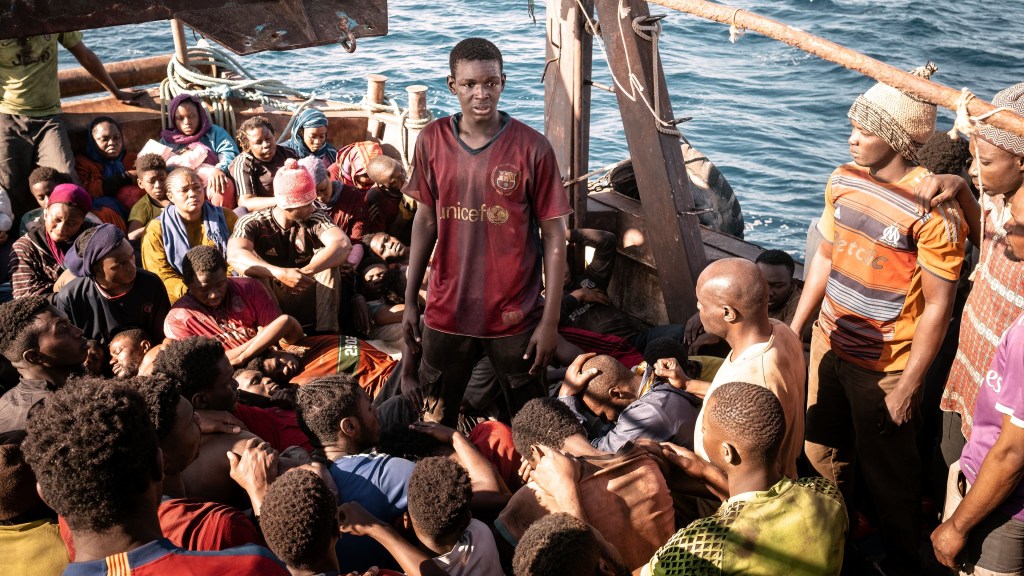
When Io Capitano starts, we’re seeing territory that’s very unfamiliar for the Italian filmmaker Matteo Garrone: in that this is a film about poverty in Senegal. Even though it’s unfamiliar for him, there’s still a great sense of empathy being displayed here that pertains to the struggles of people who seek to escape poverty, which Garrone makes clear has deeply resonated with him – and informed the stories that he chooses to tell. But Io Capitano feels like a moment for Garrone to show he can uplift his audiences, and as he commits to that with relative ease, yet perhaps his empathy for such a struggle can only take him so far.
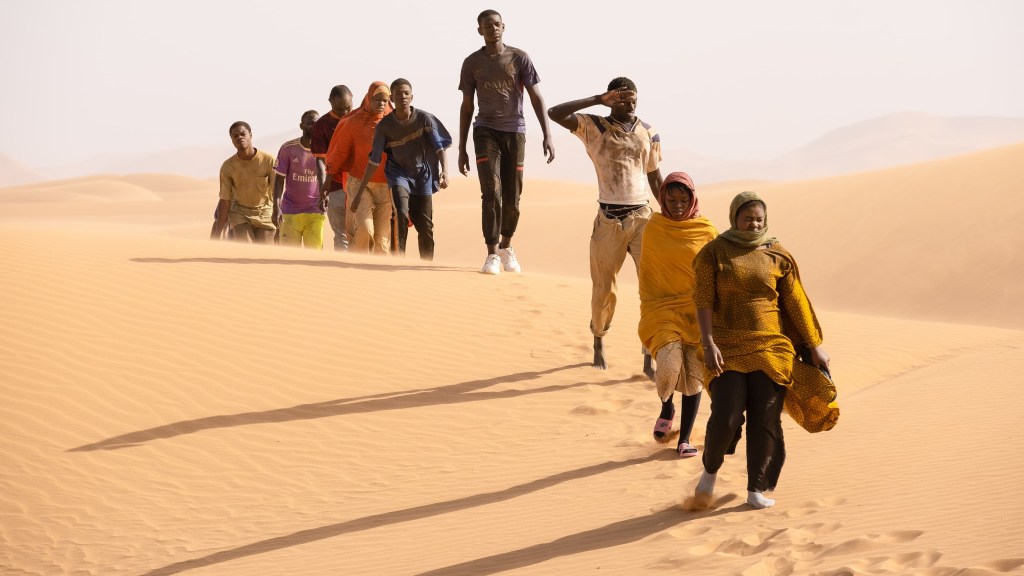
Io Capitano tells the story of Seydou and Moussa (portrayed by Seydou Sarr and Moustapha Fall), two teenage boys from Senegal who decide they will leave their poverty-stricken life in Senegal to seek a better life in Europe. Their road to a better life is not an easy one, but their spirit is undeterred by the hardships that they face on that journey – and one that also parallels Odyssey by Homer. Instead of making a film all about the perspective of immigrants seeking a better life for themselves within a political point of view, what Garrone opts for is a story about how this journey shows itself to be for the boys as they face one hardship after another.
Garrone has never been a filmmaker who shied away from such issues in his films, as shown through Gomorrah or Dogman. It’s a part of why I think that his approach to telling such a story is at least somewhat commendable, because it’s evident that Io Capitano deeply empathizes with both Seydou and Moussa’s desire for a better life in Europe. If anything else were to make this more apparent, there’s never a defined picture of Europe in Io Capitano, but it also becomes clear that this is where Garrone’s perspective as a Westerner might also inhibit some limitations for how deeply involved with this story he can get.
At its best, Garrone is able to pull some deeply moving performances from his two young leads: Seydou Sarr and Moustapha Fall. With noting that for both actors, it was their first movies, Garrone gives them enough room to deliver incredibly powerful work from start to finish – perhaps knowing that this is a film that is made with a sense of urgency given the fact that it is a film made about a presently ongoing crisis in Libya. Garrone doesn’t opt to stay only within the realm of realism, and shows himself even to be willing to break away from that, creating a tone that would at least read as inspirational for some viewers.
Yet I think that Io Capitano doesn’t fully work, in that same sense, knowing that Garrone can only tell so much from his own point of view. Given that Io Capitano is a film all about Senegalese teenagers who are going through thick and thin to aim for a better life in Europe, despite being completely unsure of their path moving forward, that also ends up giving the film a distinct gaze that emphasizes their suffering all the more. The question remains regarding whether or not this is ultimately how stories about Black people would indeed be classified as “realism” by most storytellers’ standards, and while Garrone doesn’t fall down into making this film exclusively about the suffering (the lives of the boys within Senegal are not shown to be entirely sad, creating complex characters from within), it also adds an uncomfortable gaze too.
But there’s no doubt in my mind that Matteo Garrone has his heart in the right place. Given the sort of films that Garrone has made in the past, it’s clear that something of this sort would resonate deeply with him. It also just happens to be an example of how he can’t fully delve into that world, either. Yet I think that Garrone makes it clear that he doesn’t wish to make these films exclusively about his own people, but people he feels he can connect with. This is indeed a motivating factor for a film like the excellent Gomorrah, and many of those same trademarks can be found within Io Capitano – though it teeters such a fine line regarding telling such a story as spectacle. It never falls in that territory of exploitation, but if this were a lesser filmmaker telling this story, it very well could have done so.
Watch the trailer right here.
All images via Cohen Media Group.
Directed by Matteo Garrone
Screenplay by Matteo Garrone, Massimo Gaudioso, Massimo Ceccherini, Andrea Tagliaferri
Produced by Matteo Garrone, Paolo Del Brocco
Starring Seydou Sarr, Moustapha Fall
Release Date: September 7, 2023 (Italy)
Running Time: 121 minutes



 Cinema from the Spectrum
Leave a comment