
✯✯✯✯✯
Through his filmmaking career, Iranian director Mohammad Rasoulof has often been facing scrutiny from the Iranian government. It’s not hard to see why, especially after watching any of his previous films, for he’s always been a vocal critic of the ways in which the governing system suppresses the rights of the people around himself. When The Seed of the Sacred Fig was announced as part of the lineup at the 2024 edition of the Cannes Film Festival, he and his cast were interrogated by Iranian authorities and banned from leaving the country, although not without also presently facing an eight-year prison sentence including flogging. It’s important to recognize this context upon which a film like The Seed of the Sacred Fig exists, because it also speaks towards what Rasoulof wishes the world to see: and I’m glad he’s still able to make these films while he can.

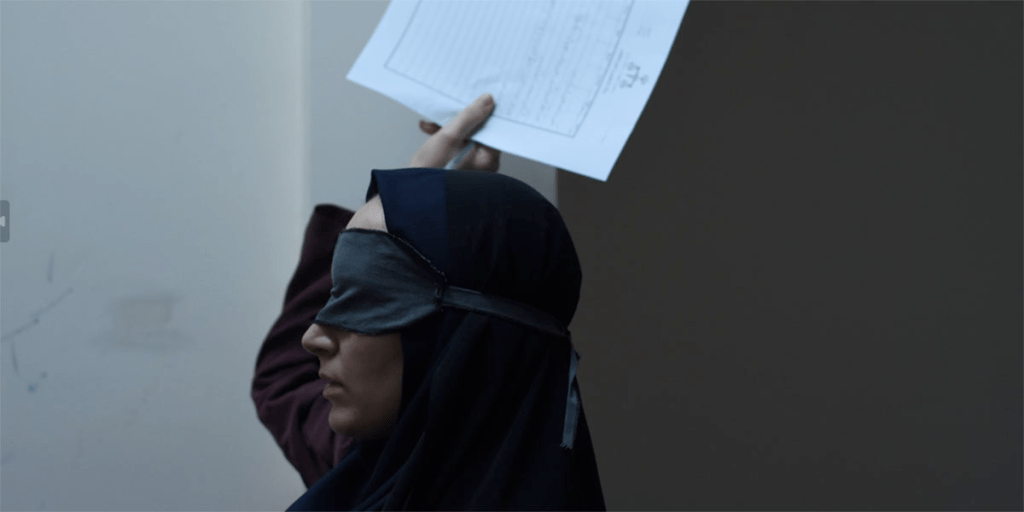
Set during the civil unrest which followed the death of Mahsa Amini in police custody, The Seed of the Sacred Fig is a film about the family of Iman (Misagh Zare), a lawyer who works for the Iranian government. As the family patriarch, he sets strict rules in place for which they must always follow. His wife Najmeh (Soheila Golestani) remain devout, but his two daughters Rezvan (Mahsa Rostami) and Sana (Setareh Maleki) eventually challenge his own devotion. With the incorporation of real riot footage in The Seed of the Sacred Fig, it’s hard to watch this without at least thinking that this film feels urgent – especially with the level of scrutiny that Rasoulof faces from his own government.
Given the broader political context upon which The Seed of the Sacred Fig had been made within, you can’t watch this film without at least feeling anger building inside. This all feels best stated by how Rasoulof incorporates real riot footage during the Mahsa Amini protests, before we contrast that with the life of Iman’s family – especially as the film finds a perfect framing through his daughters. The end result is that you feel the same sort of confusion that they all undergo, especially as they are so young and are trying to comprehend how such cruelty can be so commonplace, after a young woman their age can be brutalized by the police and the offending parties would in turn face no consequences (at the time of her death, Amini was 22 years old).
Most impressively, it also gives perfect context for why each member of this family interacts with one another in the manners that they do. For Rezvan and Sana, the two of them witness Iranian authorities mercilessly beating their friends and it becomes clear to them what’s really happening in the world around them. Yet because they are the children within their family, their own opinions are so easily dismissed by both Iman and Najmeh, who believe that the rules are set in place in order to keep the world around them civilized. Yet the dynamic that forms between the members grows increasingly distrustful, especially as Iman finds himself becoming increasingly paranoid as a result of the civil unrest that’s unfolding around him. But Rasoulof’s interests come forth in how such devotion ultimately renders you a cog in a machine that suppresses the human rights even of those one loves. And as that anger slowly bottles up, it only shakes up this perception of a seemingly normal family at that.
Over the course of the film, as Iman’s paranoia grows more intense, The Seed of the Sacred Fig slowly shifts towards becoming a thriller. But it never feels like a shift that comes out of the blue, rather it’s the end result of a person within a position of power feeling insecure about his position in relation to his family. As this power imbalance ends up threatening how everyone sees one another, it only deconstructs the morality play by which such societal rules are placed. It only gives the film a feeling akin to imprisonment, which only incite acts of rebellion – which a film like this exists to stand for.
Knowing the political context upon which The Seed of the Sacred Fig was made, together with director Mohammad Rasoulof’s own personal conflicts with Iranian authorities, only works to create a more harrowing portrait up close. These consequences can still be felt within a more intimate familial setting, which only makes The Seed of the Sacred Fig all the more potent. The scope of such a film seems small at first, but as it escalates, the end results are hard to forget. It’s a film that signifies how authority figures don’t dictate how human beings choose their fate, it’s the nature of a person that determines where they wish to go. That Mohammad Rasoulof was still able to accomplish a film of this sort, and have it released, is more than just an act of bravery – it’s a moment to get people to start talking, it all starts with censored protest footage and keeps going from there.
Watch the trailer right here.
All images via NEON.
Directed by Mohammad Rasoulof
Screenplay by Mohammad Rasoulof
Produced by Mohammad Rasoulof, Rozita Hendijanian, Amin Sadraei, Jean-Christophe Simon, Mani Tilgner
Starring Soheila Golestani, Missagh Zareh, Mahsa Rostami, Setareh Maleki, Niousha Akhshi, Amineh Arani
Premiere Date: May 24, 2024 (Cannes)
Running Time: 168 minutes
 Cinema from the Spectrum
Leave a comment