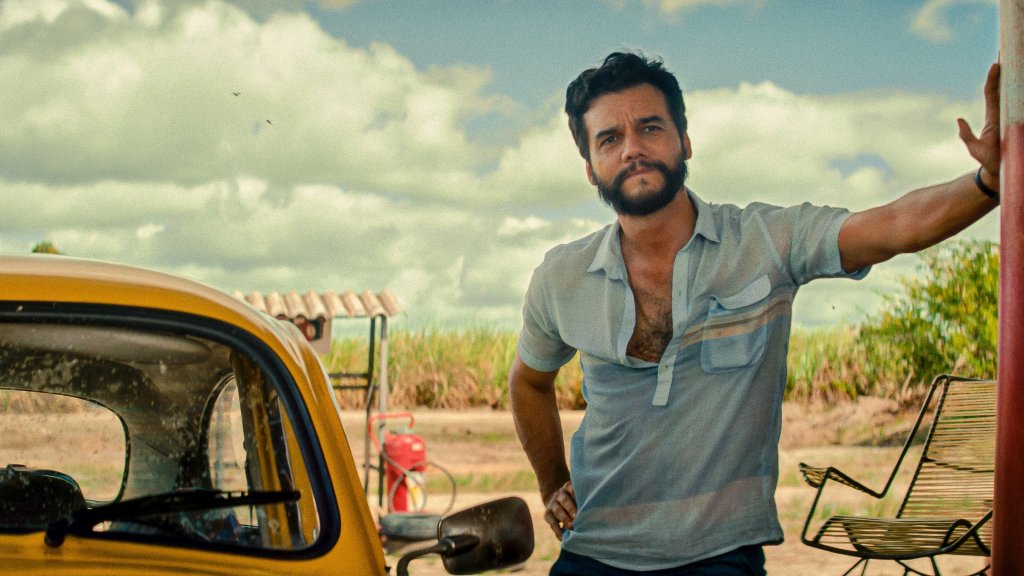

From 1964 until 1985, Brazil was under a military dictatorship. As with most dictatorships, everything from free speech, democracy, and even art were stifled under an increasingly irrational fear towards communism. Instead of trying to understand, voices were suppressed and people found themselves increasingly restricted. The Secret Agent takes place within this time frame.
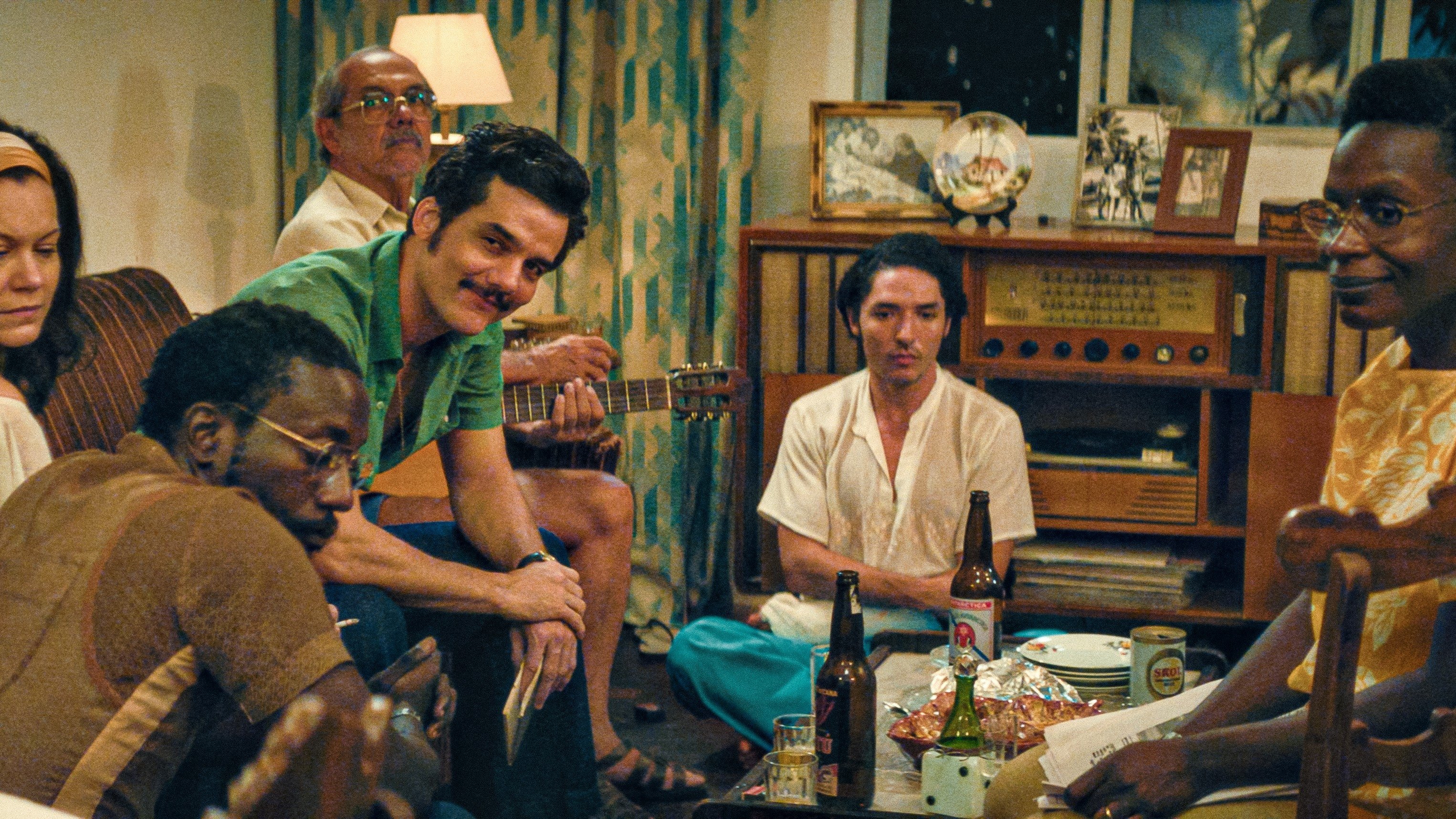
The Secret Agent is divided into three different chapters, each dealing with what it’s like living within a fascist regime. Whether it’s how art can become a strong sense of escapism or the toll it forces ordinary people forced to become spies themselves in a now fractured life they live.
The imagery of sharks is especially important with this film, with it constantly occurring within the film. These events range from a leg planted within a shark’s body to jaws appearing constantly throughout the film, to Popeye battling a shark seen on a TV screen. You sense how significant this film is for Kleber Mendonça Filho in not only to inform the pacing of the film, but the predatory nature that corruption creates. Like Jaws, the film is about how the government’s actions implicates its citizens and substantially changes their lives.
Through the first part and the second part we follow a pair of hitmen that serve as a dark mirror to the main protagonist Marcelo (Wagner Moura) and his son. Marcelo, a teacher turned spy, has to hide after clueing into to the governments’ corruption. Eventually, he adopts the name Armando. Forced to spend time away from his son, who he hands off to his in-laws. The in-laws operate a cinema which allows the aspect of film, and it’s metatextual effect on this film, to flourish.
With Marcelo pulled away from his son, cinema serves as a blanket to cover him from the corruption of the world. The film eventually introduces a present day set of university workers that uncover tapes and information as it relates to Marcelo’s identity swap and the sort of deal he has made within this version of a witness protection program. To me, this reflects the core of what the film is about, and it’s really about stories how they endure, their importance and the insistence that they must be preserved for future generations.
The Secret Agent deals with topics like identity, paranoia, and what living in a crippling police state is like. Each part connects to each other, but through them, they represent different aspects of life under this regime. The one aspect that connects all of them together is a meta commentary on the nature of narratives and how while they are a form of escapism and a distraction, they also occur from documentation and history. The film references Jaws not only as a template for the pacing, but also the nature of the shark itself as a predator. A lot of the stories are sensationalized and embellished, and that can often be the case of authoritarian military regimes. Stories can both help those from being victimized or can cause problems in their representation, but eventually the truth comes out.
The camerawork is especially strong with showing the corruption in a quick close up of blood on traffic officers uniform to the way bodies are disposed of it in the streets covered by newspapers. This frequently hides the nature of violence that occurs. A warm, saturated palette and with smooth camera work makes this as technically impressive as the incredibly difficult balancing of the script, its humour and that tragedy that occurs.
At its core, it is about people trying to find family members that the government suppresses. What makes this a powerful thriller is it ultimately is grounded within humanity, the mystery isn’t a huge revelation, but it is what we often find when faced with corruption. Wager Moura is one of the finest actors we have and brings a strong humanity to the character, Marcelo. Audiences can easily see a reflection of themselves within the humanity he brings. The Secret Agent is an important film in how it depicts the importance of not only doing the right thing, but the cost in doing it. As the world finds itself inching closer to a police state and in to an authoritarian regime, we should recognize not only the power of stories but the importance that they do not die out.
Watch the trailer right here.
All images via NEON.
Directed by Kleber Mendonça Filho
Screenplay by Kleber Mendonça Filho
Produced by Emile Lesclaux, Kleber Mendonça Filho, Wagner Moura, Brent Travers
Starring Wagner Moura, Alice Carvalho, Gabriel Leone, Maria Fernanda Cândido, Isabél Zuaa, Udo Kier
Premiere Date: May 18, 2025 (Cannes)
Running Time: 158 minutes



 Cinema from the Spectrum
Leave a comment