
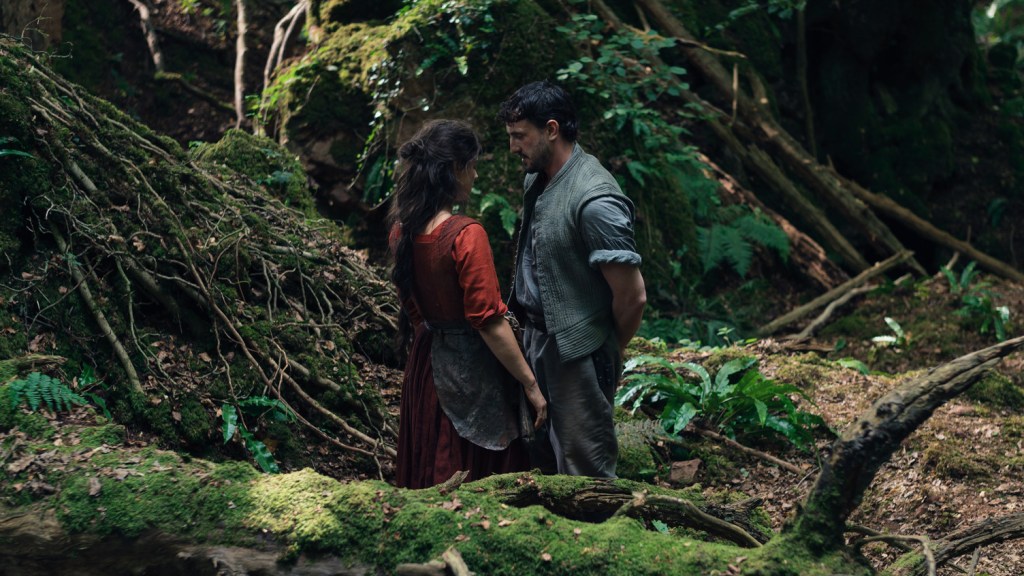

Hamnet is based on the novel of the same name by Maggie O’Farrell. The plot is a fictionalized recreation of events before and after the death of William Shakespeare’s son, Hamnet. The film was adapted by Chloé Zhao, who co-wrote the screenplay with Maggie O’Farrell.
The nature of this film’s name as it connects to Shakespeare’s works often has a sort of meta commentary. The start of the film deals in a love story between Shakespeare, a studying Tutor and Agnes, the eldest of a farmers’ daughter. These different walks of life mimics the core love story of Romeo and Juliet, but instead deals in a different sort of grief.
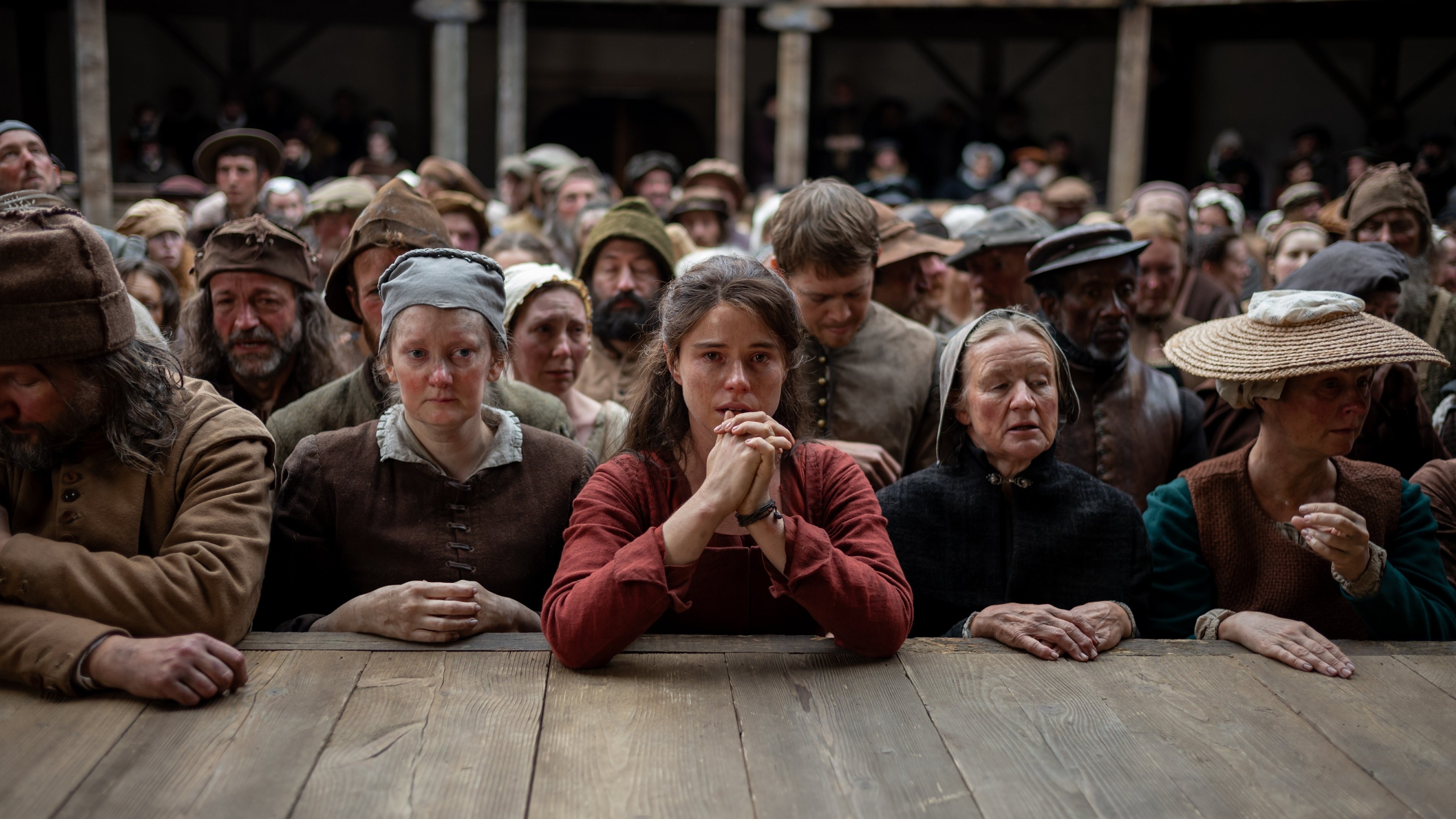
While the film does depict a great amount of tragedy and grief, it also deals in love and connection. However, the different walks of life between the two frequently cause conflicts, one with William’s father, and another with Agnes, who is left to raise their children alone, while William Shakespeare becomes the playwright we know him to be.
While Shakespeare is busy working on his plays, his only son falls ill and dies, stricken in grief but unable to cope. He begins to bury himself in his work, while Agnes wrestles with grief and finds it hard to cope with–forced to raise her remaining children, her two daughters, by herself.
The film itself incorporates Chloé Zhao’s knack for natural lighting with incredible cinematography by Łukasz Żal, who recently did the cinematography for The Zone of Interest. Alternating between sweeping wide shots and devastating close-ups, the blocking is incredibly precise and does not feel wasted. The natural light also evokes imagery often seen in classic westerns, The Searchers is one that comes to mind. There are shots within this film that seem very complex but so precise it just makes you sit in awe of the beauty of the world. While William is grieving his son, he looks into the clouds to see the moon disappear. Whether it’s the characters fighting the elements or grieving indoors or even peaking into the afterlife, it feels very soft and delicate in dealing with these themes.
At the core of the film, it is about how life is reflected in art and the importance of art within the grieving process. It does not depict the act of making art glamorous, and we see Shakespeare drunkenly writing plays as a way to avoid grieving, as he probably should. His wife Agnes is forced to take on the brunt of the responsibilities and comes away thinking he does not care about how the loss has impacted herself. It is only through seeing Shakespeare’s rendition of Hamlet that she starts to see him again.
Hamnet is particularly powerful because it demonstrates what art can do and the reflections of life that can be found throughout all art through the ugliness and the beauty of art. The world can become a disruptive and confusing place, but by giving into art we can begin to see the power it can have and how grief is very complicated and often manifests in different ways. Paul Mescal and Jessie Buckley help ground William Shakespeare and Agnes Shakespeare as human characters that live outside their status. While the relatively new child actors keep us interested in what is going on and help the devastating loss sell.
Chloé Zhao has gotten better at her craft, especially her use of natural light, Hamnet is as visually arresting as it is emotionally devastating, and I hope this film serves as a springboard for what is to come.
Watch the trailer right here.
All images via Focus Features.
Directed by Chloé Zhao
Screenplay by Chloé Zhao, Maggie O’Farrell, from the novel by O’Farrell
Produced by Liza Marshall, Pippa Harris, Nicolas Gonda, Sam Mendes, Steven Spielberg
Starring Paul Mescal, Jessie Buckley, Emily Watson, Joe Alwyn
Premiere Date: August 29, 2025 (Telluride)
Running Time: 125 minutes




 Cinema from the Spectrum
Leave a comment