
Starting a review of The Smashing Machine means first tracing the storylines behind its creator. The film is written, directed, produced, and edited by Benny Safdie. As I mentioned in my previous review of If I Had Legs I’d Kick You, Safdie and his brother Josh were key figures in the mumblecore movement, making five films together between 2009 and 2019. Their 2017 feature Good Time, starring Robert Pattinson, was the breakthrough that brought them to a wider audience, followed two years later by Uncut Gems. With Adam Sandler delivering what many consider the performance of his career, that film cemented the Safdies as vital voices in contemporary cinema.
In 2023, the brothers announced an amicable split to pursue solo projects. Josh’s first feature, Marty Supreme starring Timothée Chalamet, arrives this December. Benny, in contrast, has explored acting with appearances in Pieces of a Woman, Licorice Pizza, Oppenheimer, Happy Gilmore 2, and the upcoming Christopher Nolan blockbuster The Odyssey. He also co-created and starred in the TV series The Curse and even appeared briefly in Obi-Wan Kenobi. His most significant step, however, has been releasing his debut solo feature The Smashing Machine, which premiered in Venice and earned him the Silver Lion for Best Director. That win marked the first time an American filmmaker took home back-to-back Silver Lions, following Brady Corbet’s victory for The Brutalist in 2024.
The Smashing Machine tells the story of former amateur wrestler and MMA fighter Mark Kerr. Kerr is played by Dwayne Johnson, unless you’ve been living under a rock (pun intended). Johnson is, of course, “The Rock,” a professional wrestling legend whose films have grossed over $14.9 billion worldwide. Strangely enough, the only other film I’d seen him in was Moana (just his voice) which made this the first time I’ve experienced a full dramatic performance from him.
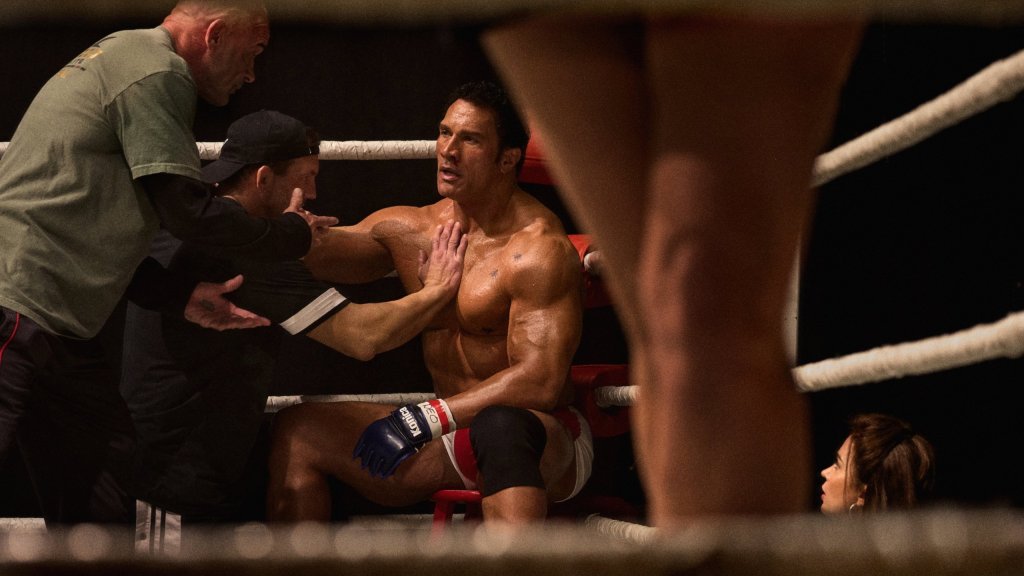
Right from the start, what impresses is how thoroughly Johnson embodies Kerr. Physically, the resemblance is uncanny, aided by impeccable makeup work from Kazu Hiro. More importantly, Johnson captures Kerr’s charisma and innate kindness, qualities visible in real footage of the fighter. For much of the film he disappears into the role, though when Kerr shaves his head, it becomes harder not to see Johnson himself. Still, this is easily his most transformative work.
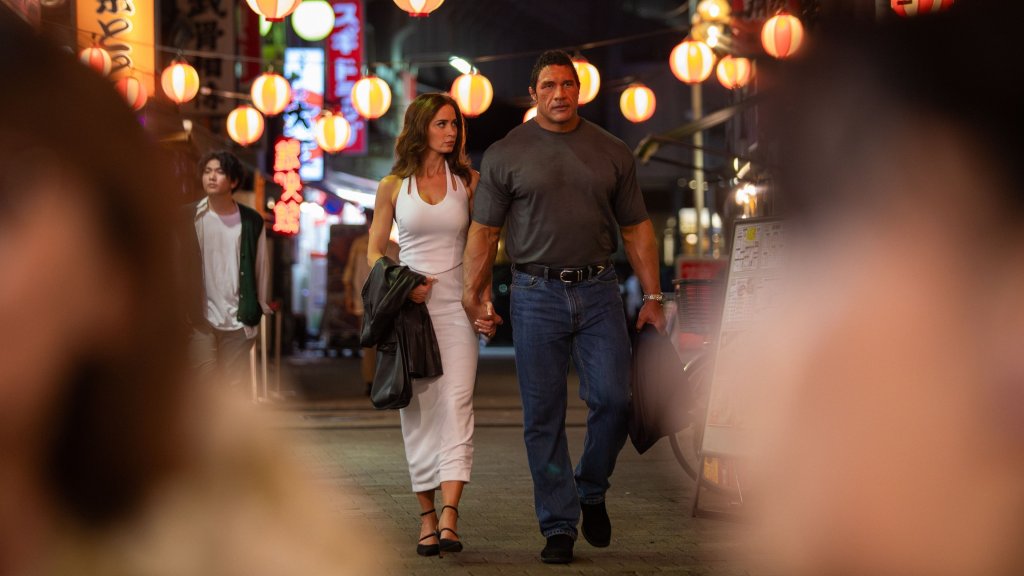
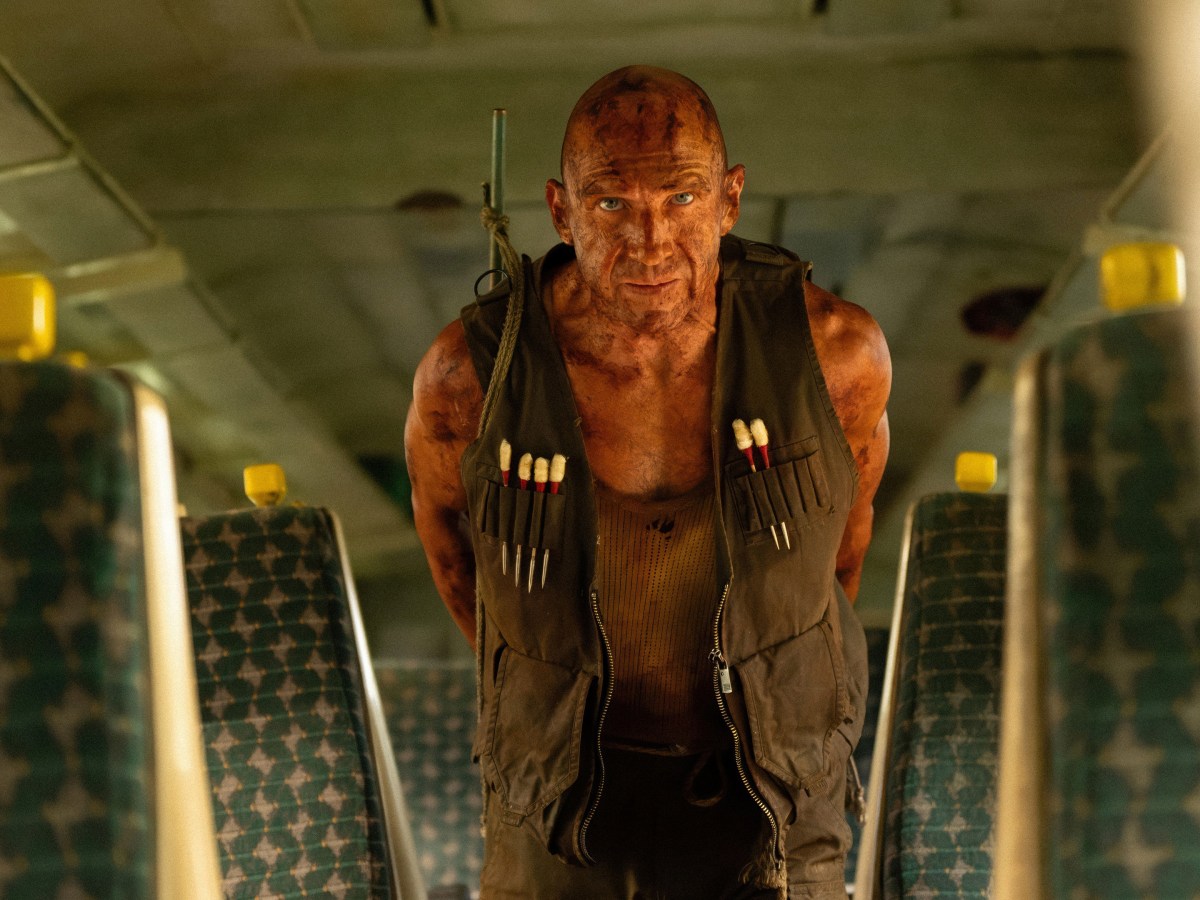
Safdie doesn’t let the supporting cast fade into the background. Emily Blunt brings real dimension to Kerr’s wife Dawn Staples, balancing vulnerability and strength, while MMA fighter Ryan Bader delivers what might be the discovery of the year as Kerr’s lifelong friend and fellow fighter Mark Coleman. Bader’s natural chemistry with Johnson makes their bond feel lived-in and never forced. Blunt, meanwhile, grounds the film with sharp emotional clarity. Their dynamic shines in an argument scene that avoids melodrama, instead presenting two flawed people whose points both feel valid and painfully real.
Safdie also portrays Kerr as a man deeply flawed by opioid addiction, long before America reckoned with the crisis. At the same time, the film highlights his place at a pivotal moment in MMA history, particularly during the rise of PRIDE Fighting Championships in Japan, where Kerr and Coleman competed. One of the film’s most striking moments comes when Kerr buys a kintsugi bowl. The metaphor is a little obvious, but it works, since Kerr too is something broken trying to piece himself back together.
The craft here is remarkable. Cinematographer Maceo Bishop, making his first feature collaboration with Safdie, shoots portions of the film for IMAX while maintaining a gritty docudrama feel. Early scenes appear on VHS before shifting to 16mm, later upscaled for IMAX presentation, a world first. The grain, texture, and shifting formats make the late 1990s setting feel immediate and lived-in. Equally impressive is the score by experimental jazz artist Nala Sinephro, whose compositions are haunting, ethereal, and occasionally flecked with chiptune textures. It is easily one of the most distinctive scores of the year.
By the end, what lingers isn’t just Dwayne Johnson’s transformation into Mark Kerr or the rush of seeing PRIDE-era MMA recreated with such intensity. It is how Safdie finds beauty in the cracks, whether through grainy film stock, fractured relationships, or a broken man rebuilding himself. A few choices feel overstated, and Johnson’s star persona occasionally slips through, but The Smashing Machine remains a gripping, deeply felt portrait. As a solo debut, it shows Benny Safdie can stand firmly on his own, even if there is still room to grow.
Watch the trailer right here.
All images via A24.
Directed by Benny Safdie
Screenplay by Benny Safdie, based on the documentary film The Smashing Machine: The Life and Times of Extreme Fighter Mark Kerr directed by John Hyams
Produced by Benny Safdie, Dwayne Johnson, Eli Bush, Hiram Garcia, Dany Garcia, David Koplan
Starring Dwayne Johnson, Emily Blunt, Ryan Bader, Bas Rutten, Oleksandr Usyk
Premiere Date: September 1, 2025 (Venice Film Festival)
Running Time: 123 minutes

 Cinema from the Spectrum
Leave a comment