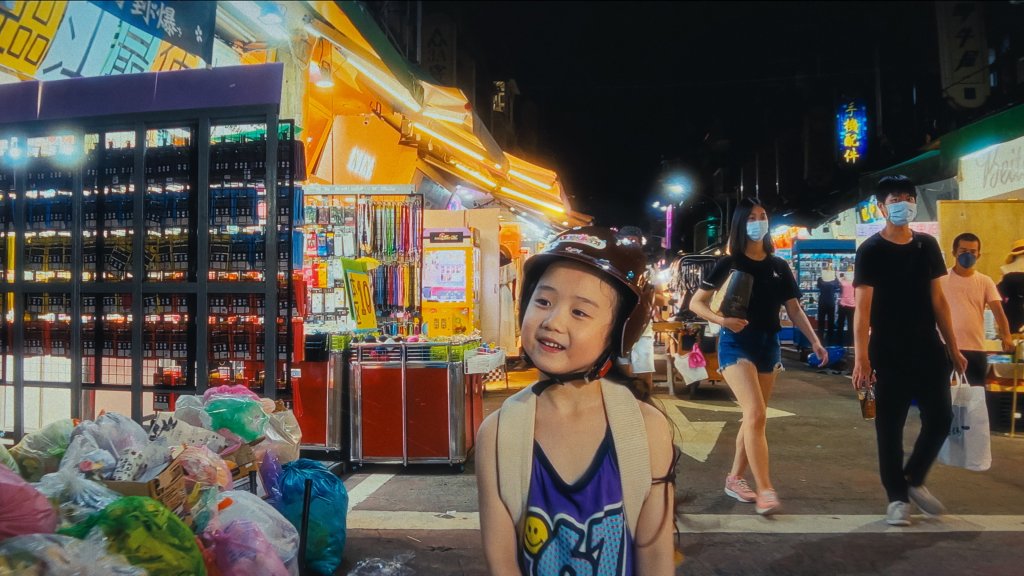

The longtime collaborator of Academy Award-winning filmmaker Sean Baker, Shih-Ching Tsou makes her solo directorial debut with the Taipei-set Left-Handed Girl. Taking from the same DIY methodology that allowed her creative collaborator to create a name for himself within the world of American independent cinema, Tsou shows herself to be a powerhouse within her own right. It all starts with the way that Tsou builds a certain identity for herself within a different realm of cinema; now capturing the bustling life in Taipei’s night market as a family largely tries to get by. By the end of the film, you’ll only ever find yourself thinking about its titular protagonist I-Jing. For her curiosity in this new environment, the way that Shih-Ching Tsou envisions it only makes what we witness in Left-Handed Girl all the more remarkable.
Left-Handed Girl starts off with a family moving into a new city. At first, we are introduced to the single mother Shu-Fen (Janel Tsai), and her two daughters: the moody I-Ann (Shih-Yuan Ma) and the precocious I-Jing (Nina Ye), the titular left-handed girl. For I-Jing, every moment seems to be a new adventure as her mother works in Taipei’s night market operating a noodle stand, and I-Ann works as a hostess selling betel nuts. But over the course of the movie, as we get around to meeting more members of the family, we begin to see that they are, to say the least, unconventional. Shu-Fen’s siblings are incredibly snooty and don’t approve of her for meeting up to their standards is one thing that may feel close to home; but then comes her mother’s involvement in a strange trafficking scam to make ends meet, and her superstitious father, who believes I-Jing’s left-handedness is the devil’s work. I-Jing isn’t deterred by any of this, especially as her curiosity about the world grows, but she soon develops a knack for shoplifting based on her grandfather’s superstition.
It might first catch you that Left-Handed Girl is shot entirely with iPhones. This is hardly a first for either director Shih-Ching Tsou or co-writer Sean Baker, given how both filmmakers have developed a penchant for DIY filmmaking through the years. Yet Shih-Ching Tsou assures herself as a great filmmaker in her own right, considering how deeply personal this project shows itself to be from start to finish. It all begins with how the iPhone cinematography is utilized, particularly in scenes that focus specifically on Nina Ye’s character as she wanders through the night market. It’s hard not to be charmed by the young Nina Ye, who cements herself as a star in the making here, but the iPhone lenses also create a deeply immersive quality to the work. We’re put in the young I-Jing’s perspective all throughout as a result. Considering how much of the film’s running time she’s spending on the move, we’re also building a closeness that’s taken along with I-Jing as she goes shoplifting with her “devil hand.” But it also brings us much closer to seeing familial shame spread from one generation to the next, with the same ability to comprehend where it comes from as I-Jing.
Yet even with the title of the film centering on I-Jing, it’s also evident that there’s a desire to highlight the oddities existing within a seemingly normal family. I-Jing’s left-handedness isn’t the only place where someone defies the norms, but the idea of I-Jing’s grandmother taking part in human trafficking is one among many peculiarities existing here. Shu-Fen is looked down upon for being married, believed to be worthless by her own mother too, even as we’re introduced to her as a caretaker. I-Ann first appears reserved, but later we see that she’s having an affair with her own boss whilst making snarky comments about another attractive woman hired for the job and flirting with older men for quick cash. As I-Jing’s grandfather would describe her left-handedness, it’s a “devil’s hand,” but every single member of this family, while maintaining face, quickly shows their own “devil’s hand” as the drama continually unfolds.
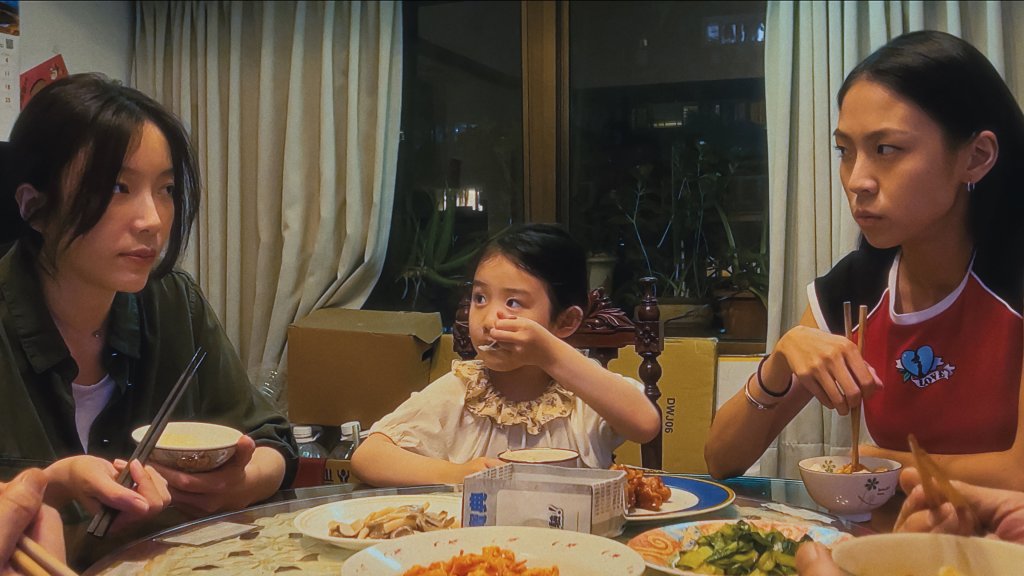
And at a certain point, you can’t help but feel as if there’s a sense of generational shame coming into play. The end result of this is people, even those we may know as family, beginning to fight with one another over harmful perceptions that spread from one generation to the next. For young I-Jing, simply moving around the night market like it’s her own personal playground, it’s hard for her to comprehend any of this – but that’s where Shih-Ching Tsou asserts something more powerful at play. The whole film is built around I-Jing’s innocence as a shield, but as people around her continue to take it for granted as a means of preserving face, we see it won’t cover them from a greater shame. It all comes into full force in the film’s climactic dinner scene; continuing a tradition of uncomfortable dinner scenes where every member of the family lays out their grievances one by one. But where Tsou takes this is especially shocking, if one particular reveal perhaps brings everyone’s reputations down to a new low.
It all starts with innocent curiosity, but that’s the perfect stepping stone for Shih-Ching Tsou to move into something more unnerving. For all the most shocking revelations that come into play about the oddities that exist among the family we’re seeing here, Shih-Ching Tsou also delivers something very funny all the same (there’s a scene involving a meerkat that perhaps ranks among the funniest moments I’ve seen all year). Sean Baker and Shih-Ching Tsou through the years built a very distinctive methodology of DIY filmmaking, but Tsou shows herself a remarkable filmmaker in her own right through Left-Handed Girl. The work’s intimacy gives you a sense that this is her own vision from start to finish, but its slice-of-life presentation only unravels itself into something more stunning. Above all, you’ll find that Nina Ye is on her way to becoming a big star.
Watch the trailer right here.
All images via Netflix.
Directed by Shih-Ching Tsou
Screenplay by Shih-Ching Tsou, Sean Baker
Produced by Shih-Ching Tsou, Sean Baker, Mike Goodridge
Starring Janel Tsai, Shih-Yuan Ma, Nina Ye, Brando Huang, Akio Chen, Xin-Yan Chao
Premiere Date: May 15, 2025 (Cannes)
Running Time: 109 minutes

 Cinema from the Spectrum
Leave a comment