
✯✯✯✯✯
In his first film in sixteen years (and third overall), Todd Field brings to the screen a portrait of a very complicated woman. A complicated woman who established herself as a beloved figure, but of course, the only side we see is something we’re familiar with on social media. Soon enough, that’s where watching Tár becomes a question of how well we really know the mind of someone who’s at the top, and has established their reputation as being among the best of the very best. A patient character study of this sort almost seems rare in today’s cinematic landscape, but particularly within American cinema. But it’s also the embodiment of what I find to be the building blocks of the best cinema has to offer in recent memory, because films like Tár trust that the audience is capable of making their own judgments as they watch.
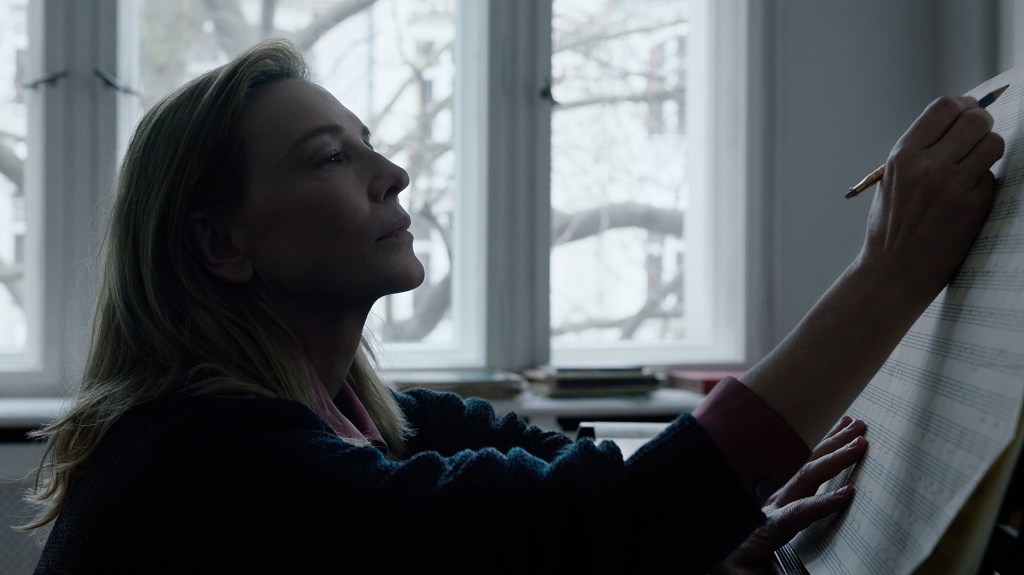
Lydia Tár (Cate Blanchett) is introduced to us as the first female chief conductor of the Berlin Philharmonic. She is an EGOT (a person who has won an Emmy, Grammy, Oscar, and Tony), and in her first proper moments on the screen, we see her promoting her new book, Tár on Tár in an interview with Adam Gopnik. But as we get to know Lydia Tár herself, whether it be from her own life at home or her own views on what makes great art, what comes forth from Tár is a picture of someone from the top – not as a fellow spectator of her craft but someone also within that same playing field that she occupies. It’s one among many aspects of Tár that make it work so effectively, but it also builds a compelling character just from how the world is framed in turn.
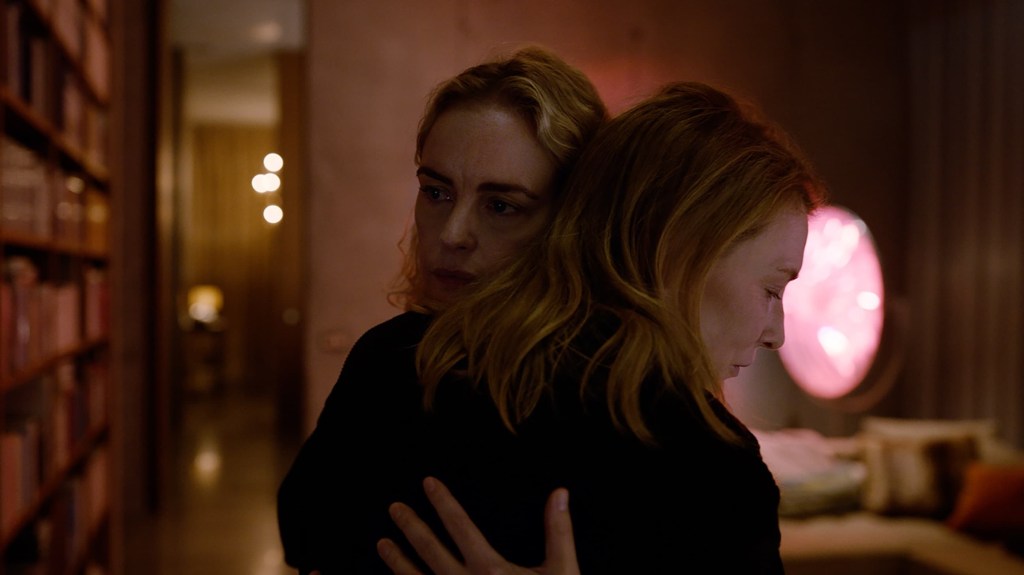
Todd Field holds no punches with Tár, especially when making a film all about the perception of those who make “high art” by the general public. Lydia Tár is shown to be someone who dedicates herself so strongly to her work, and every bit of her life almost has a perfect routine that she cannot break away from. All of this is best reflected in the filmmaking, because every minute of the film, much like this routine, is so intricate. Perhaps it’s the fact that everything is so intricate, to a point where you see her weaknesses shine. And it’s those weaknesses that bring Tár down to our level.
The presence of Lydia Tár herself is already hypnotic enough, in part because her views are so skewered to represent a popular view of high art. Yet this film does not abscond her. It also does not exonerate her. It’s a very precise balance that would seem almost impossible to achieve, but Todd Field manages to hit every note. We’re compelled by her because she’s someone who’s at the top and sees herself as that, but cannot stand the balance being disrupted – and then once that balance is disrupted, you can sense the gradual breakdown coming forth. And we’re also fascinated by the way she sees everything because of that position.
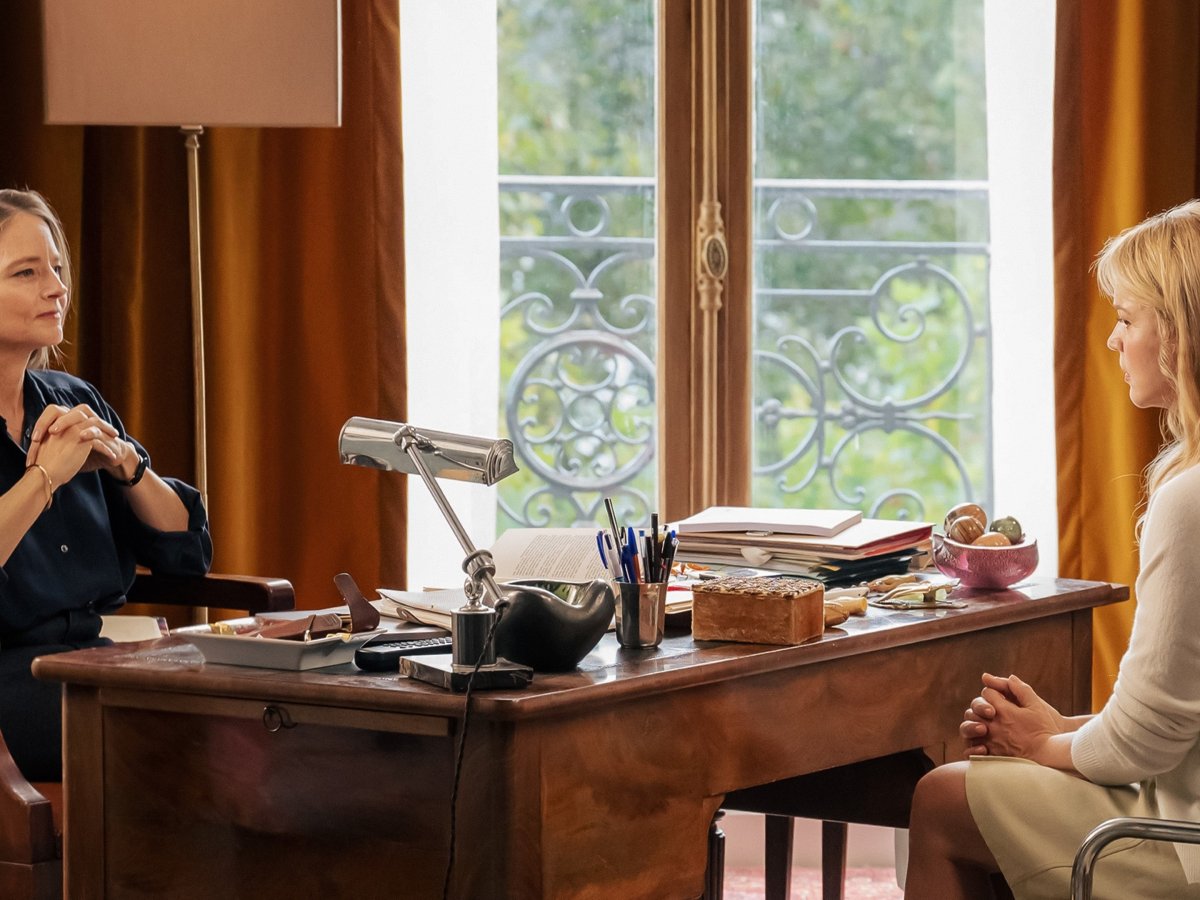
In a key moment of the film, we see Tár lecturing a group of music students in Julliard. This scene unfolds itself in a single take, and it’s one of the few times that Tár has her own stance on great art challenged by a student. This student identifies themself as BIPOC pangender, resulting in a lack of interest in the canonized artists comprising of supposedly cishet white male composers. It’s a moment where we see Tár projecting how she, a lesbian artist, can look past the surface level gender politics as made popular through social media trends in order to become the established artist that she is. But it’s also a moment where you can see how these views of art only end up being reductive, which begs to the viewers to think how they look at what makes great art. It’s not so simple like people can perceive it to be, but it also becomes about how much we are willing to engage with out of pure interest before we reflexively dismiss the work. This scene comes back to bite Tár, but it’s also because of how she presented herself in the moment: giving us that moment to really digest how she puts herself on that student’s playing field. She’s condescending and even comes out crass, all in the name of maintaining the stance she has on great art.
With how intricate every moment of Tár’s filmmaking is, perhaps it’s the fact that everything is so perfect that allows Todd Field to interrogate her own methods. Guiding a career-best performance from Cate Blanchett, the whole world that Lydia Tár encapsulates is one that is fueled by her own ego. It’s the way she tries to maintain control that makes her performance so hypnotizing. Because it becomes clear that Lydia Tár sees herself as a great artist, but even to that end she might have forgotten what exactly it was that made her a human being first and foremost. And it’s also what makes the slow fall from grace as depicted in the film so thoroughly compelling.
Tár doesn’t look to ask whether a figure in the arts world who was abusive was in the right or wrong. In Todd Field’s film, the interest lies in the world that molds people like Tár to believe that they’re on the top of the world. But that slow breakdown of its title character’s ego is one that unfolds akin to a thriller, which keeps every moment so entrancing. All of that is perhaps best encapsulated by the film’s opening credits, which feature the names that would normally be relegated to the end of the film before the “written and directed by Todd Field” card shows up. Because all these people feed into one person’s own rise to greatness. And it only takes one to understand what goes on inside that mind. It seeks to interrogate that world where people like Tár would be exonerated, but also how the perception from the outside is not as simple as it may be boiled down to. It represents the best sort of cinema, because it trusts the viewer that they can make the judgment for themselves.
Watch the trailer right here.
All images via Focus Features.
Directed by Todd Field
Screenplay by Todd Field
Produced by Todd Field, Alexandra Milchan, Scott Lambert
Starring Cate Blanchett, Noémie Merlant, Nina Hoss, Sophie Kauer, Julian Glover, Allan Corduner, Mark Strong
Release Date: October 7, 2022
Running Time: 158 minutes




 Cinema from the Spectrum
Leave a comment