
Since his debut feature Kaili Blues in 2015, Bi Gan has emerged as one of the most distinctive voices in Chinese cinema. His films are known for hypnotic long takes and for blurring inner and outer reality. Kaili Blues features a 41-minute tracking shot that appears without warning near the end, drifting through time and landscape with haunting simplicity. In Long Day’s Journey Into Night, released in 2018, he constructed the final act as a single hour-long shot in 3D, introduced through an in-movie gesture that invited audiences to put on the glasses without explicit instruction. Resurrection continues this approach with a 30-minute continuous sequence that serves as the emotional and thematic peak of the film. Dong Jingsong’s cinematography provides exquisite depth and texture, and the music by M83 layers the visuals with dreamlike resonance.
Resurrection is Bi Gan’s most ambitious project to date. It is organized as a cycle of five segments, each centered on a different sense. Each segment has its own visual rhythm, tonal palette, and symbolic vocabulary, yet all contribute to a larger landscape of memory, ritual, and perception. Recurring motifs such as wax, fire, mirrors, cigarettes, Buddha figures, and shifting weather appear across the film, sometimes fading, sometimes returning in altered form. These images seem to undergo reincarnation along with the characters. The senses are not simply methods of perception; they are avenues for transformation, identity, and passage. The film premiered in competition at this year’s Cannes Film Festival and received the Special Jury Prize. The recognition reflects the way Resurrection treats cinema as a living structure that preserves light, memory, and emotion.
The narrative begins in the first segment and concludes after the fifth. The world is inhabited by beings called the Other Ones, who seek Deliriants, individuals who maintain a connection to dreams, memory, and longing in a society moving away from such experiences. One Deliriant, played by Jackson Yee, becomes the focus of this pursuit. Miss Shu, portrayed by Shu Qi, comes to understand the depth of his attachment to dreams. Rather than destroy him, she grants him a soft death by installing a film projector inside his body so he can continue to inhabit cinematic worlds generated by his consciousness.
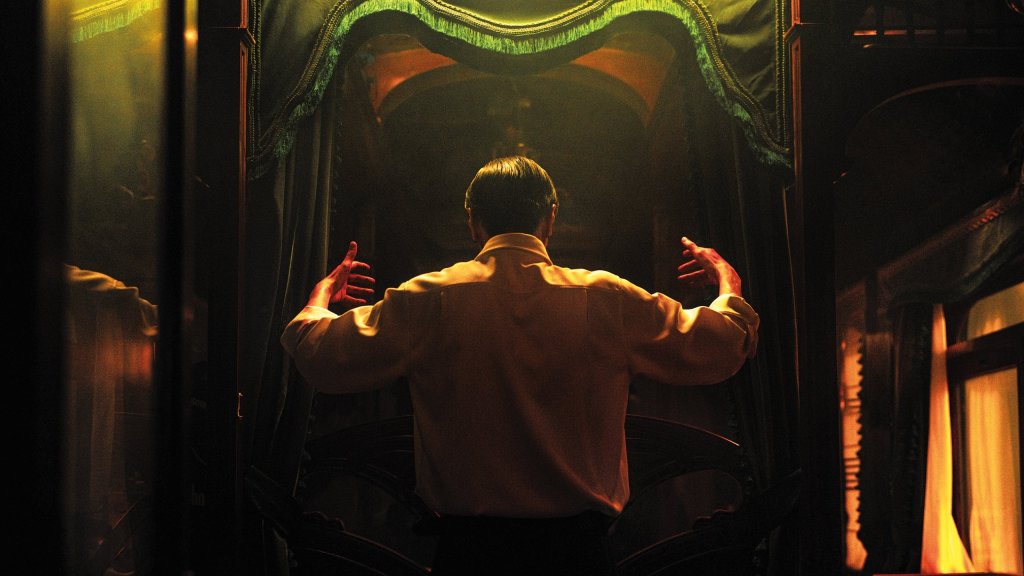
The first segment presents this encounter. Its visual language draws from silent-era cinema, including Nosferatu and The Cabinet of Dr. Caligari. Intertitles replace dialogue for the first thirty minutes. The camera lingers on tactile details, especially human hands, which appear in a series of striking compositions. One scene shows a dollhouse diorama of a Chinese opium den, complete with stop-motion puppets. The hands seem to be discovering how to touch the world for the first time. Bi structures the five segments to follow the development of human senses, beginning with touch. Cinema itself begins as a tactile act, both historically and physically. Miss Shu threads the film through the projector, making the act of projection an act of resurrection. The season is spring, symbolizing birth and awakening.
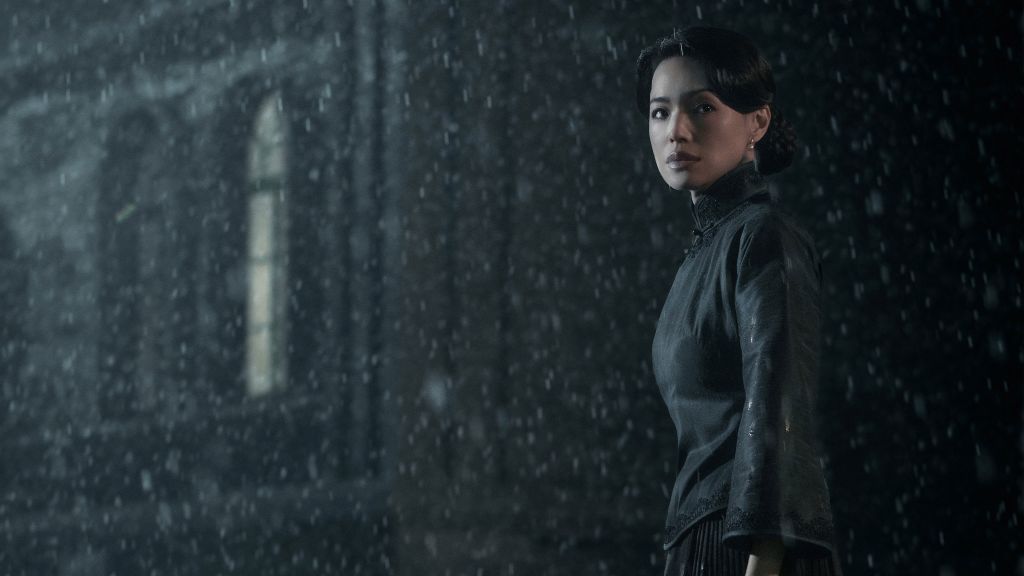
Sound emerges in the second segment. Dialogue is introduced and Jackson Yee’s character is reincarnated as Qiu Moyun, a man in a mid-20th-century industrial city accused of stabbing someone with a fountain pen. The act carries symbolic weight, suggesting how words and criticism can wound as deeply as any blade. The visual design recalls Jean-Pierre Jeunet’s The City of Lost Children and echoes Dark City, 12 Monkeys, and Le Samouraï. Rain saturates the streets, functioning as a metaphor for sound. The world begins to echo, and perception expands beyond the tactile. One line captures this idea: “In order to hear your voice, I’m ready to let the world go silent.” It evokes the experience of sitting in a theater, focusing entirely on the film.
The third segment focuses on taste, which conveys memory, emotion, and spiritual weight. Jackson Yee plays a character in a Buddhist temple. His interactions with statues and objects suggest the burdens of inherited beliefs and cultural memory. The objects appear fragile yet imposing, hinting at how past experiences shape identity long after their original meaning is lost. A voice instructs him to break a tooth with a shard from a shattered Buddha statue. He obeys, releasing a spirit of bitterness that resembles his father, signalling the personal and inherited nature of regret. Taste becomes a way of absorbing the world and its bitterness. Snow covers the landscape, muting colour and sound, so subtle impressions stand out. The imagery draws on ritual, folklore, and oral memory rather than specific films, creating a contemplative, reflective tone.
The fourth segment explores smell, connected to memory, intuition, and subtle recognition. Jackson Yee appears as a con artist who mentors a young orphan, played by Guo Mucheng. The girl believes scent can carry meaning and reveal hidden truths. Jia teaches her tricks that extend perception beyond the obvious. Smell becomes a method of understanding the world in ways that cannot be replicated. The cinematic references in this segment are subtle, evoking the mood and intimacy of Wong Kar-wai’s crime films and the observational realism of Jia Zhangke. The weather reflects late summer moving toward fall, warmth tempered by decay, suggesting that memory and insight unfold gradually. Smell highlights faint traces that survive when everything else has faded.
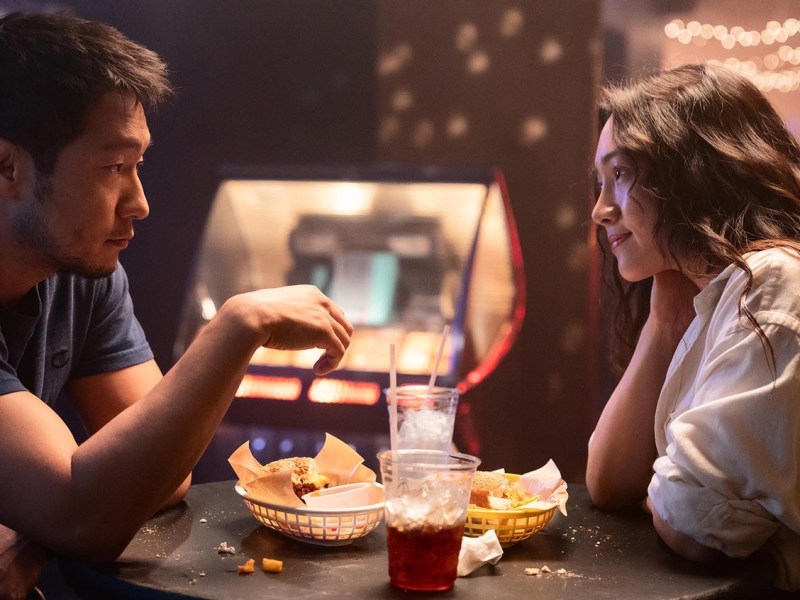
The final segment focuses on sight and is set in a port city on New Year’s Eve, 1999. Jackson Yee plays Apollo, a young hoodlum, who becomes captivated by the singer and moll Tai Zhaomei, played by Li Gengxi. Their story unfolds in the streets and nighttime spaces of the city, blending danger, intimacy, and longing. Bi Gan’s signature long take dominates the sequence, lasting thirty minutes and requiring painstaking night shoots over several weeks. The lighting shifts from red to blue, marking changes in mood and perspective, while rain gives way to sunlight, signalling the passage of time. The segment recalls the romanticism of Jim Jarmusch’s Only Lovers Left Alive, while remaining entirely Bi Gan. Sight captures desire, revelation, and the fragility of connection, showing the interaction of light, shadow, and emotion.
Resurrection is a meditation on perception, memory, and transformation. Across the five segments, Bi Gan invites the audience to experience the world through touch, hearing, taste, smell, and sight. Each sense opens a path into identity and longing. Recurring motifs connect the segments and suggest that experiences, emotions, and lives are constantly transformed. Cinema becomes a vessel for resurrection, preserving fleeting moments and revealing the invisible. Through long takes, attention to light and sound, and poetic visual design, Bi Gan creates a fully immersive experience that remains vivid and resonant. Resurrection asks audiences to enter its world fully, to move through its sensations, and to carry its impressions with them.
Watch the trailer right here.
All images via Janus Films.
Directed by Bi Gan
Screenplay by Bi Gan, Zhai Xiaohuai
Produced by Shan Zuolong, Yang Lele, Charles Gillibert
Starring Jackson Yee, Shu Qi, Mark Chao, Li Gengxi, Huang Jue, Chen Yongzhong
Premiere Date: May 22, 2025 (Cannes)
Running Time: 156 minutes



Leave a Reply