
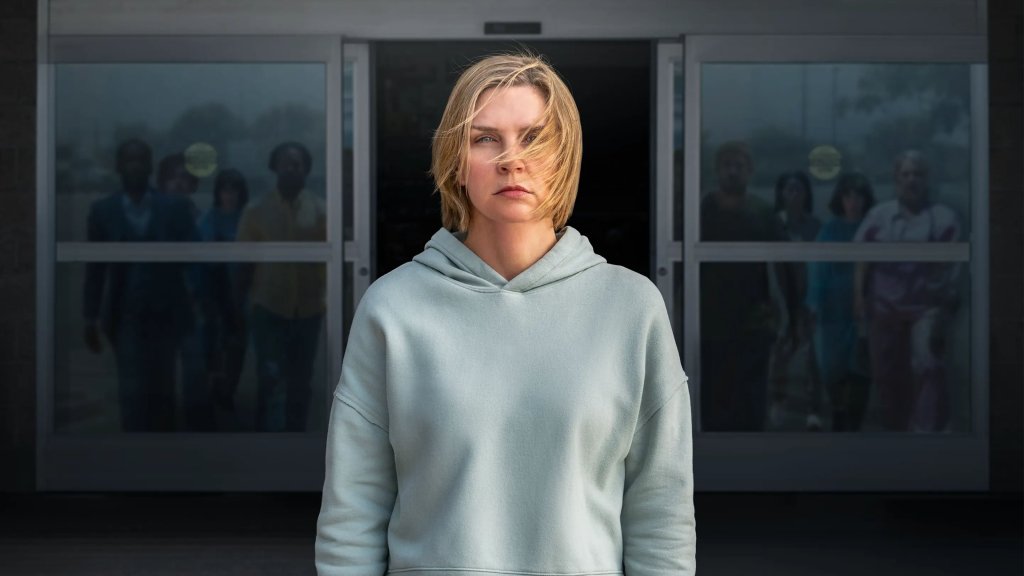

The name Vince Gilligan alone was enough to make watching Pluribus an immediate priority. Over the past two decades, Gilligan has established himself as one of television’s most exacting and influential storytellers, known for his patience, moral seriousness, and deep trust in character over spectacle. Pluribus arrives with the weight of that legacy behind it, and with the quiet confidence of a creator once again asking difficult questions about identity, agency, and the cost of belonging.
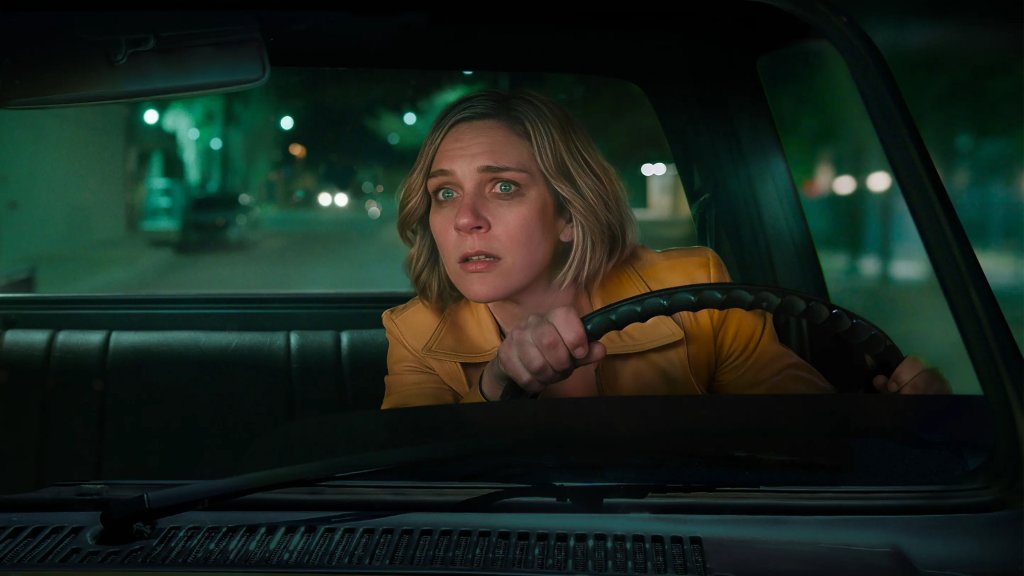
After Better Call Saul concluded in 2022, Gilligan turned to his next project. Apple TV ordered two seasons of what would become Pluribus, which premiered with little advance explanation, and few signals about its governing rules or long-term direction. While Pluribus contains substantial mystery, it is less interested in resolution than in the emotional and psychological cost of existing inside an all-encompassing collective. The unease centers around the erosion of personal autonomy, and the strain placed on those who still believe control over one’s own mind should be non-negotiable.
The series opens with the discovery of a radio signal that contains a viral RNA sequence that rapidly infects nearly the entire population. Those affected do not become violent, but instead merge into a collective consciousness that appears free of pain or inner conflict, leaving only thirteen people untouched. One of the immune is Carol Sturka, a romance novelist played by returning Gilligan collaborator Rhea Seehorn, whose partner dies in the initial collapse when help is no longer available. As the scale of the catastrophe becomes clear, Carol learns through an official broadcast that personal autonomy may now be the rarest remaining condition.
Gilligan and his writers build Carol’s history through accumulation rather than exposition. Small details such as an offhand remark about conversion therapy, a breathalyzer attached to her car, or a casual reference to past heroin use quietly sketch a life shaped by surveillance, correction, and self-policing. The series trusts the viewer to connect these fragments, revealing how Carol’s sexuality, addiction, and family history have taught her to guard her interior life. That instinct becomes the show’s emotional anchor. In a world where billions have fused into a shared consciousness, Carol’s grief and frustration register as acts of resistance rather than pathology.
This attention to interior pressure reflects a long-standing Gilligan preoccupation. Across his work, transformation rarely arrives as spectacle. It unfolds through routine, clothing, and habit, through what people cling to as their surroundings shift. Pluribus extends that sensitivity, focusing less on the mechanics of change than on the quiet negotiations people make to survive it. What matters here is not how the world ends, but what parts of the self endure once familiarity dissolves.
Some viewers have described Carol as difficult or unlikable, a reaction that overlooks what the series establishes with care. She is among the few who still experience fear and sorrow in their original form, without the emotional insulation the Others provide. Her sharpness and volatility stem from terror rather than cruelty, from the knowledge that absorption would cost her the very friction that proves she still exists. Her resistance is not ideological but visceral.
As the story widens, the supporting cast clarifies the moral terrain. Zosia, played by Karolina Wydra, becomes the viewer’s most intimate conduit to the hive mind. Her calm, gentle presence never turns overtly threatening, which makes it more unsettling. Zosia genuinely believes she is helping Carol, and her attempts at comfort expose the hive’s vulnerability. Emotional disturbances ripple outward and trigger physical responses among the Others. Shared empathy becomes a liability rather than a reassurance, and Wydra’s careful stillness reveals how fragile collective harmony truly is.
Koumba Diabate, played by Samba Schutte, represents the opposite response to survival. Open, curious, and unafraid, he embraces the altered world without hesitation, living aboard Air Force One simply because it pleases him. His comfort within the system allows the show to examine consent from another angle. The Others cannot assimilate without permission, and Diabate offers his freely. His ease makes Carol’s resistance more stark and illustrates how consent can blur when pressure is gentle and alternatives quietly disappear.
That tension reaches its most extreme expression in Manousos Oviedo, played by Carlos Manuel-Vesga. Isolated in Paraguay, Manousos embodies autonomy taken to its furthest edge. He refuses assistance of any kind even as his circumstances deteriorate, choosing deprivation over dependency. His rigid self-sufficiency borders on self-destruction and sharpens the series’ central question. Where Diabate adapts and Carol compromises, Manousos rejects the system outright. Carol’s position between them becomes the most human response the show offers, underscoring how difficult it is to remain autonomous in a world designed to erase friction altogether. As a first season, Pluribus resists the comfort of resolution. Gilligan offers no definitive answer as to whether the hive mind represents salvation or annihilation, only the growing sense that autonomy can be eroded without force. Consent here is rewritten not through violence but through reassurance, convenience, and the quiet removal of alternatives. Carol’s fear is not simply of losing herself, but of being persuaded that losing herself would be better. Pluribus ultimately functions as a warning and a question. What does it cost to remain yourself, and how often do we mistake the absence of pain for the presence of freedom?
Watch the trailer right here.
All images via Apple Studios.
Episodes directed by Vince Gilligan, Gordon Smith, Zetna Fuentes, Gandja Monteiro, Adam Bernstein, Melissa Bernstein
Teleplays by Vince Gilligan, Gordon Smith, Alison Tatlock, Ariel Levine, Vera Blasi, Jenn Carroll, Jonny Gomez
Created by Vince Gilligan
Produced by Jenn Carroll, Julie Hartley, Chris Smirnoff
Starring Rhea Seehorn, Karolina Wydra, Carlos-Manuel Vesga
First episode release date: November 7, 2025
Last episode release date: December 24, 2025
Episodes: 9





Leave a Reply