

The timing of the release of Paul Thomas Anderson’s One Battle After Another could not be any more perfect than it is. A white nationalist was killed, and a video of his shooting has circulated social media as news outlets spun around the news of his death to turn him into a noble figure. Yet, one must consider that these recent events at the time of this review’s writing would only make One Battle After Another feel timely, even if this film does not explicitly use recognizable political terms. But Paul Thomas Anderson doesn’t even need to use such terms either for you to sense that this is a movie about a world that seems too familiar to the audiences. It’s not subtle in the slightest about its themes, but it’s also difficult to imagine a movie about budding resistances against fascism being anything other than blunt. Instead, this might only make the perfect case for its urgency, as the fights never stop.
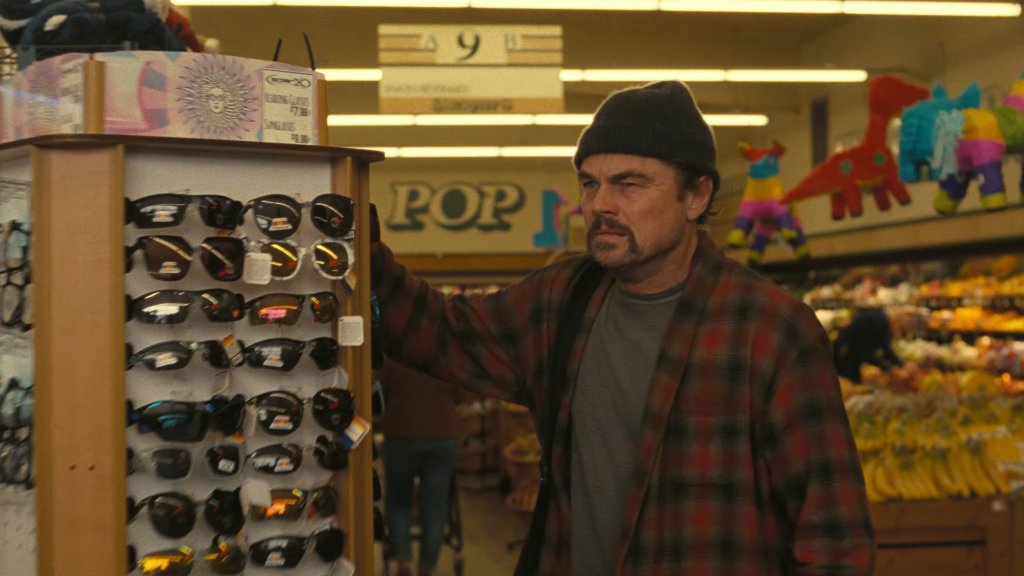
Being Paul Thomas Anderson’s first movie to be set in the twenty-first century after Punch-Drunk Love, One Battle After Another wastes no time with showing you how it feels about the United States in its present form. We’re introduced to the French 75, a group of far-left resistance fighters, on a mission to break immigrants out from a detention center. Among its members are “Ghetto” Pat Calhoun (Leonardo DiCaprio) and Perfidia Beverly Hills (Teyana Taylor), who are in a relationship. After Perfidia Beverly Hills catches the sexual fascination of Col. Steven J. Lockjaw (Sean Penn) during their first raid, she leaves Pat to raise their daughter, Willa (Chase Infiniti), before leaving to continue her revolutionary activity. Cut to sixteen years later, and Calhoun now goes by the name “Bob Ferguson” and struggles to maintain a relationship with Willa, who has grown rebellious while Bob has become a drug addict. This is where it becomes clear what kind of film Paul Thomas Anderson wanted to make, but it’s also where a greater discussion about the surrounding world of both its characters and audiences are living within.
It might be a stretch to call One Battle After Another a truly radical movie, but in an era where mainstream cinema has been so starved of explicitly political messaging, it feels like a shock to the system. Anderson’s film takes a clear influence from films like Gillo Pontecorvo’s The Battle of Algiers and Costa-Gavras’s Z, but it’s also directly inspired by the novel Vineland by Thomas Pynchon. But this film is not one that needs to be specifically radical in order to engage with why people begin to start a revolt. Instead, this film is grounded in the lives of those who branded themselves revolutionaries once upon a time, so these resistance fighters are moulded to be like people whom we recognize. Bob and Willa Ferguson create the perfect picture of the end result of the disillusionment faced by ordinary citizens trying to get their voices heard by a system that fails them. This alone would motivate the creation of a tragicomic father-daughter relationship, but for Anderson, a there’s a bigger picture to be felt.
This bigger picture is one that asks audiences why ordinary people see revolutionary activity as necessary in order to accomplish any sort of meaningful change. But when the current systems at play continue to fail even its own people, they’re stuck within an endless loop that even burns out the most proactive fighters against an oppressive system. This is where one senses that Bob Ferguson finds himself forgetting many of the most basic keywords that resistance fighters come up with in order to guarantee their own safety. Naturally, it’s very funny to see how the pedantry from other members of the newly revitalized French 75 end up alienating even himself. Meanwhile, that defeatism is part of how fascist governments end up suppressing any sort of inevitable uprising.
All of this is packaged in a genre piece that feels welcoming to any audience member. From the moment when the movie starts, you sense that Paul Thomas Anderson wants to capture a momentum that gets our hearts pumping quickly. But that rush never feels like it’s about to stop, because the fights against authoritarian regimes will not end with even one person in power being eliminated. By a certain point, one must begin to ask themselves about what can really be done to put fascists to rest, especially as they are becoming more empowered in the present day. It’s not even one battle after another, as much as it is one unending battle that lasts generations. If the people representing an opposition to fascism won’t do anything, why must it come as a surprise that ordinary people will want to take matters into their own hands?
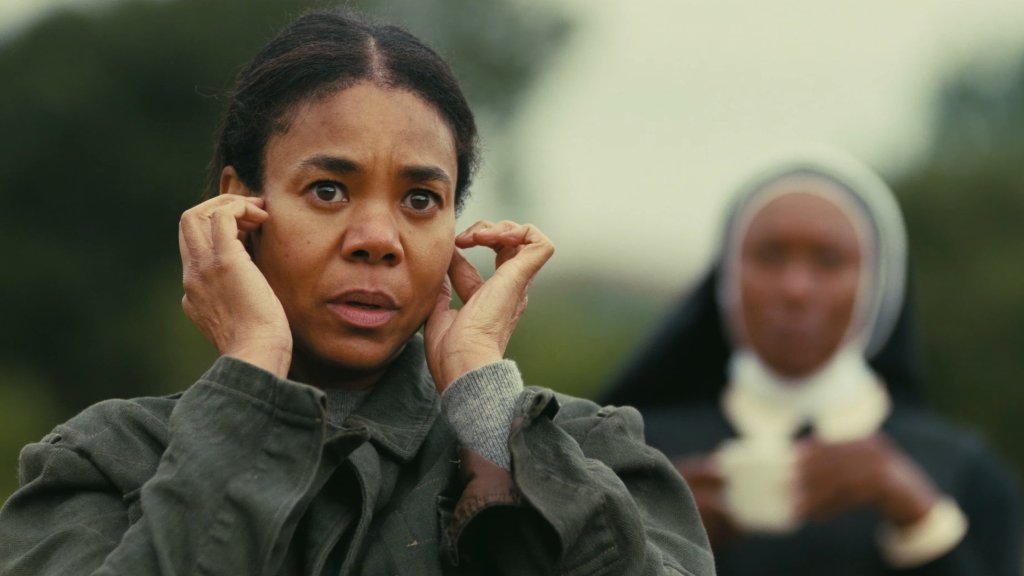
Even then, the revolutionaries themselves are not depicted within the most clear-cut manner. Leonardo DiCaprio’s Bob Ferguson is a wash-up, someone who has found himself part of something greater a long while ago. But even while he means the best for people he loves, his drug addiction and paranoia would inevitably be getting the worst of him. It isn’t just the best that Leonardo DiCaprio has been in a long time, but it might even be a career-best role for him. Not that this is a surprise, when Paul Thomas Anderson has built his career on impressive ensemble casts. These include fantastic work from Benicio del Toro, Sean Penn, Teyana Taylor, and Regina Hall. Meanwhile, the real star to look out for is none other than Chase Infiniti, perfectly embodying the woes of one generation and the need to constantly take matters into your own hands. It’s a star-making turn that she brings out in here, but it’s also fitting for a film all about community and the need for it to make a stand against authoritarianism.
Whether One Battle After Another is a piece of radical cinema is unimportant. Personally, I struggle with calling this film a truly radical piece of work, especially with films like the aforementioned The Battle of Algiers or Mikhail Kalatozov’s I Am Cuba being part of the canon. But it shouldn’t be taken lightly that this film will raise forth important questions about the nature of radicalization in our world, especially as this is not limited by generation. That a major spectacle like this can address something as heady as this, while also providing great entertainment for the audiences is certainly remarkable. It’s remarkable, because it is not something to be taken lightly. Right-wing reactionaries may be quick enough to call this movie a piece of propaganda, but that might just be a sign that they’re afraid. And they certainly should be, especially if this movie can inspire large crowds to keep the fight against fascism going. It’s a wake-up call to the world, one that understands that the revolutions that defined history start simply enough with ordinary people leading the battle.
Watch the trailer right here.
All images via Warner Bros. Discovery.
Directed by Paul Thomas Anderson
Screenplay by Paul Thomas Anderson, inspired by the novel Vineland by Thomas Pynchon
Produced by Adam Somner, Sara Murphy, Paul Thomas Anderson
Starring Leonardo DiCaprio, Sean Penn, Benicio del Toro, Regina Hall, Teyana Taylor, Chase Infiniti
Premiere Date: September 8, 2025
Running Time: 162 minutes


 Cinema from the Spectrum
Leave a comment