

Since October 7, 2023, life in the Middle East has been transformed by the war in Gaza. On that day, in a massive security breach, Hamas militants killed more than 1,200 civilians in Israel, making it the deadliest single attack in the country’s history. In response, Prime Minister Benjamin Netanyahu launched a large-scale military offensive in Gaza, sparking one of the most intense humanitarian crises in recent memory.
Enter Kaouther Ben Hania, whose breakout film The Man Who Sold His Skin became the first Tunisian film nominated for an Academy Award for Best International Feature Film. In 2023, her documentary Four Daughters blurred the line between documentary and fiction in the spirit of Abbas Kiarostami’s Close-Up, earning a nomination for Best Documentary at the 96th Academy Awards. Her latest work, The Voice of Hind Rajab, winner of the Grand Jury Prize at the Venice International Film Festival, examines one of the flashpoints of the Gaza crisis, blending reality with fiction.
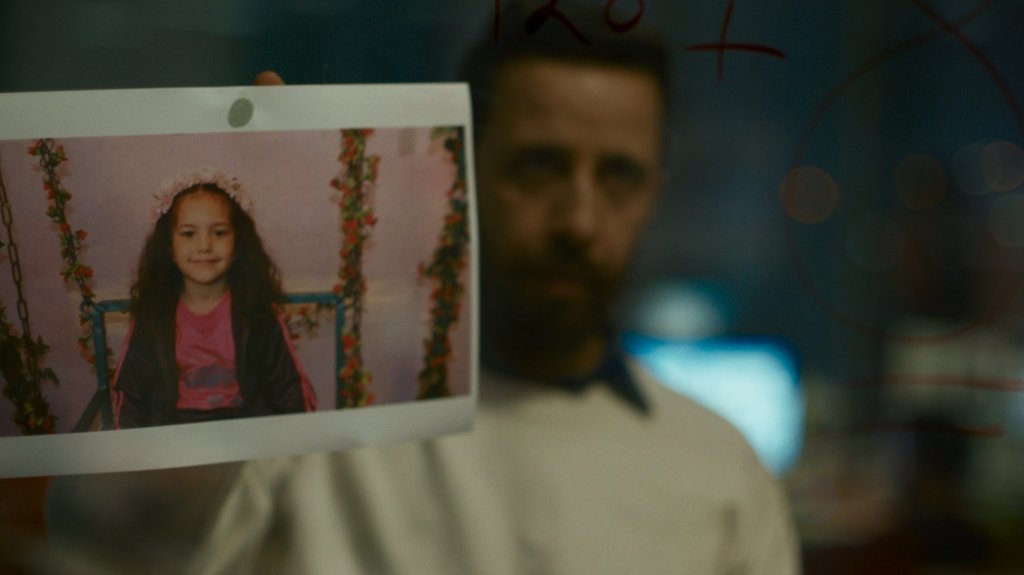
On January 29, 2024, the Palestinian Red Crescent Society received an emergency call from a five-year-old girl trapped in a car under fire from the Israeli Defence Forces (IDF), pleading for rescue. Her name was Hind Rajab. The film combines Hind’s real voice with those of the volunteers who were on the line with her that day. It is difficult to put into words, but when you watch the film, you will understand, as the actors seem to be speaking to a ghost.
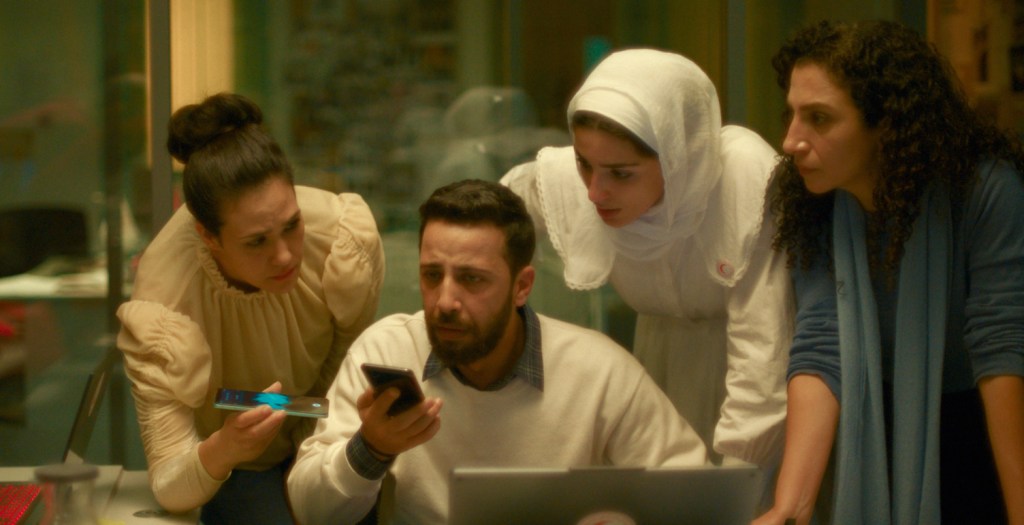
The film’s power lies in its simplicity and realism. It does not rely on flashy camera work or stylized editing. Instead, it immerses the viewer in the tense, intimate reality of the volunteers’ experience. The camera lingers on moments of quiet and anxiety, emphasizing the emotional weight of each decision. The story unfolds almost in real time, blending scripted elements with Hind’s actual voice to create an immediate and unfiltered perspective. Editing rhythm heightens tension, particularly when the line goes dead and volunteers struggle to reconnect with Hind, letting the audience experience the fear and urgency through their eyes. Among the actors, Saja Kilani as Rana delivers especially tense and emotional performances, though all the volunteers convey a heightened sense of stress and commitment under extreme pressure.
Sound is central to the film’s impact. Silence, the distant crackle of gunfire, and Hind’s real voice over the phone heighten the stakes and make the danger feel tangible. Set entirely within the offices of the Palestinian Red Crescent Society, the contained location and naturalistic lighting reinforce spatial tension and immediacy, emphasizing human drama over cinematic spectacle and making viewers feel as though they are in the room witnessing every agonizing moment. Near the end of the film, a striking moment occurs when an iPhone appears on-screen, showing footage of the original volunteers over the actors playing them. This layered device reinforces the interplay between reality and fiction, reminding viewers that the story they have been watching is grounded in actual events while emphasizing the emotional weight carried by those who lived it.
Beyond its technical execution, the film excels thematically. By narrowing its focus to one human story, it highlights resilience and courage in the face of unimaginable pressure. Hind represents innocence and the fragility of childhood amid war, while the volunteers’ moral and procedural dilemmas force audiences to confront the complexities of humanitarian work. The film challenges viewers to consider their own reactions to the crisis, stripping away the overwhelming scale of news coverage to reveal a singular, unforgettable human experience.
The Voice of Hind Rajab is a continuation of Ben Hania’s exploration of real-life stories, building on the approach of Four Daughters but leaning more heavily into fiction in the spirit of Abbas Kiarostami’s Close-Up. By blending reenactment with Hind’s actual voice, the film deepens the emotional impact while maintaining a strong connection to reality.
For audiences, this is a heavy, immersive experience, best approached with emotional preparation. While the hybrid doc-fiction format might challenge some viewers, the film avoids sensationalism and preaching. Hind Rajab speaks for herself, and her desire to live is both heartbreaking and profoundly moving. Beyond Gaza, the film offers universal lessons about human courage, systemic failure, and the act of witnessing suffering.
The Voice of Hind Rajab is a stark, intimate, and heartbreaking portrait of life in Gaza, a film that refuses to let us turn away. By focusing on a single story, Ben Hania reminds us that behind every headline are lives filled with courage, tragedy, and resilience that statistics alone can never convey.
Watch the trailer right here.
All images via WILLA.
Directed by Kaouther Ben Hania
Screenplay by Kaouther Ben Hania
Produced by Nadim Cheikhrouha, Odessa Rae, James Wilson
Starring Amer Hlehel, Clara Koury, Motaz Malhees, Saja Kilani
Premiere Date: September 3, 2025 (Venice)
Running Time: 89 minutes




 Cinema from the Spectrum
Leave a comment