
Few contemporary filmmakers have defined their era as distinctly as Yorgos Lanthimos. Before becoming a mainstay of international cinema, the Greek director began his career in experimental theatre and even helped design the opening and closing ceremonies of the 2004 Athens Olympics. His breakout feature, Dogtooth (2009), introduced audiences to his singular blend of black humor, surrealism, and discomfort, a style that would become his signature and earned the film an Academy Award nomination for Best International Feature.

Lanthimos made his English-language debut with The Lobster (2015), an absurdist love story starring Colin Farrell and Rachel Weisz. The film’s bizarre premise and deadpan tone cemented his reputation as a master of the uncanny and earned an Oscar nomination for Best Original Screenplay. His next major triumph came with The Favourite (2018), a sharp and opulent period satire that reunited him with Weisz and introduced what would become his defining creative partnership with Emma Stone. The film received widespread critical acclaim and was recognized during awards season, including Olivia Colman’s surprise win for Best Actress at the Oscars.
After a six-year hiatus, Lanthimos returned with Poor Things (2023), an adaptation of Alasdair Gray’s novel about a woman resurrected with the brain of a fetus. The film reunited him with Stone, whose audacious performance earned her a second Academy Award, and it went on to win four Oscars in total. His follow-up, Kinds of Kindness (2024), marked both an ambitious triptych and a return to his earlier mode of filmmaking, co-written with his longtime collaborator Efthimis Filippou. It was also notable as his first feature he wrote himself in seven years; Lanthimos co-wrote five of his first six films, but only one of his last four. The film explored morality, control, and submission through an ensemble cast featuring Stone and Jesse Plemons in multiple intersecting roles.
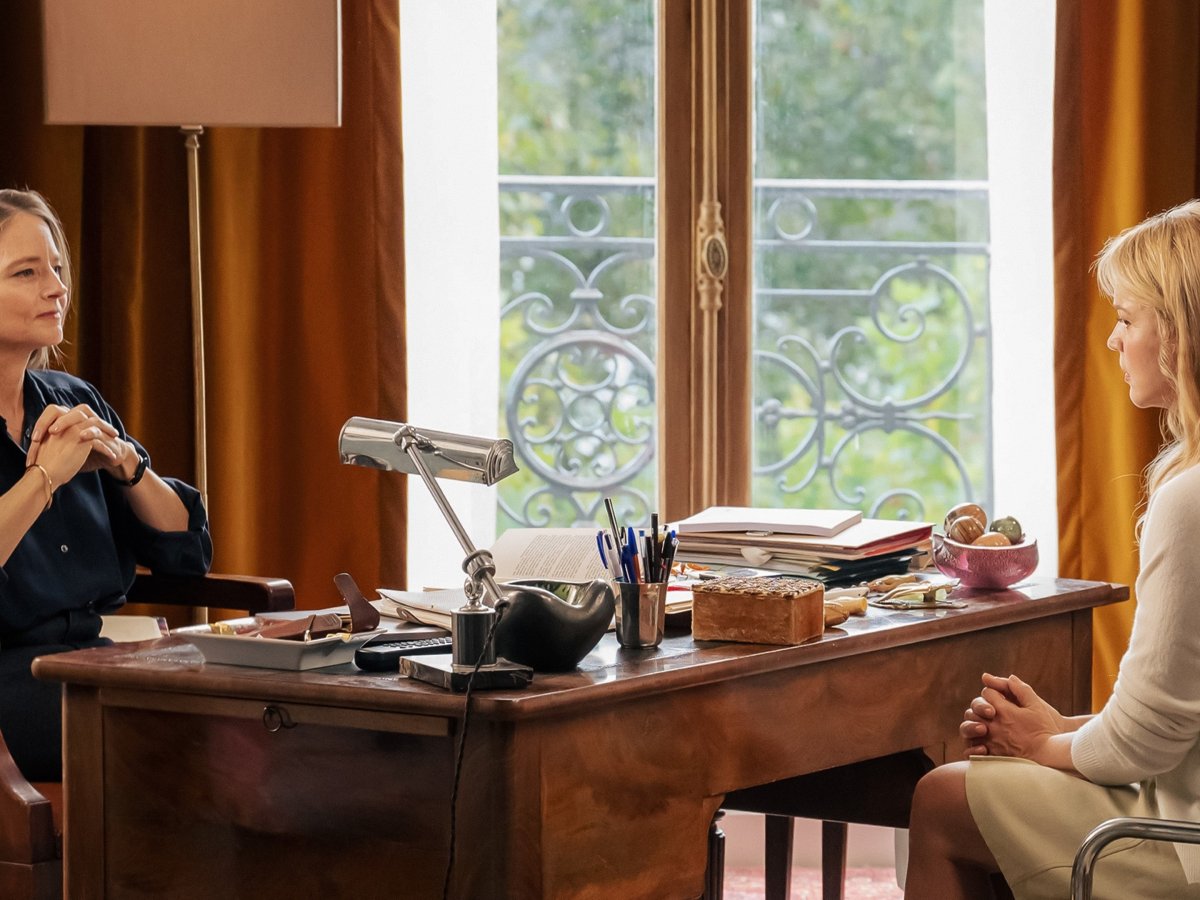
That trajectory now leads to Bugonia. Originally conceived as a remake of Jang Joon-hwan’s 2003 Korean cult classic Save the Green Planet!, the project eventually found its way to Lanthimos, a filmmaker whose sensibilities seem tailor-made for such eccentric material. The script, written by Succession and Last Week Tonight alum Will Tracy, reunites Lanthimos with Stone and Plemons and brings back Alicia Silverstone from The Killing of a Sacred Deer. Produced by Ari Aster and Lars Knudsen, Bugonia represents a meeting of some of the most distinctive minds in contemporary cinema.
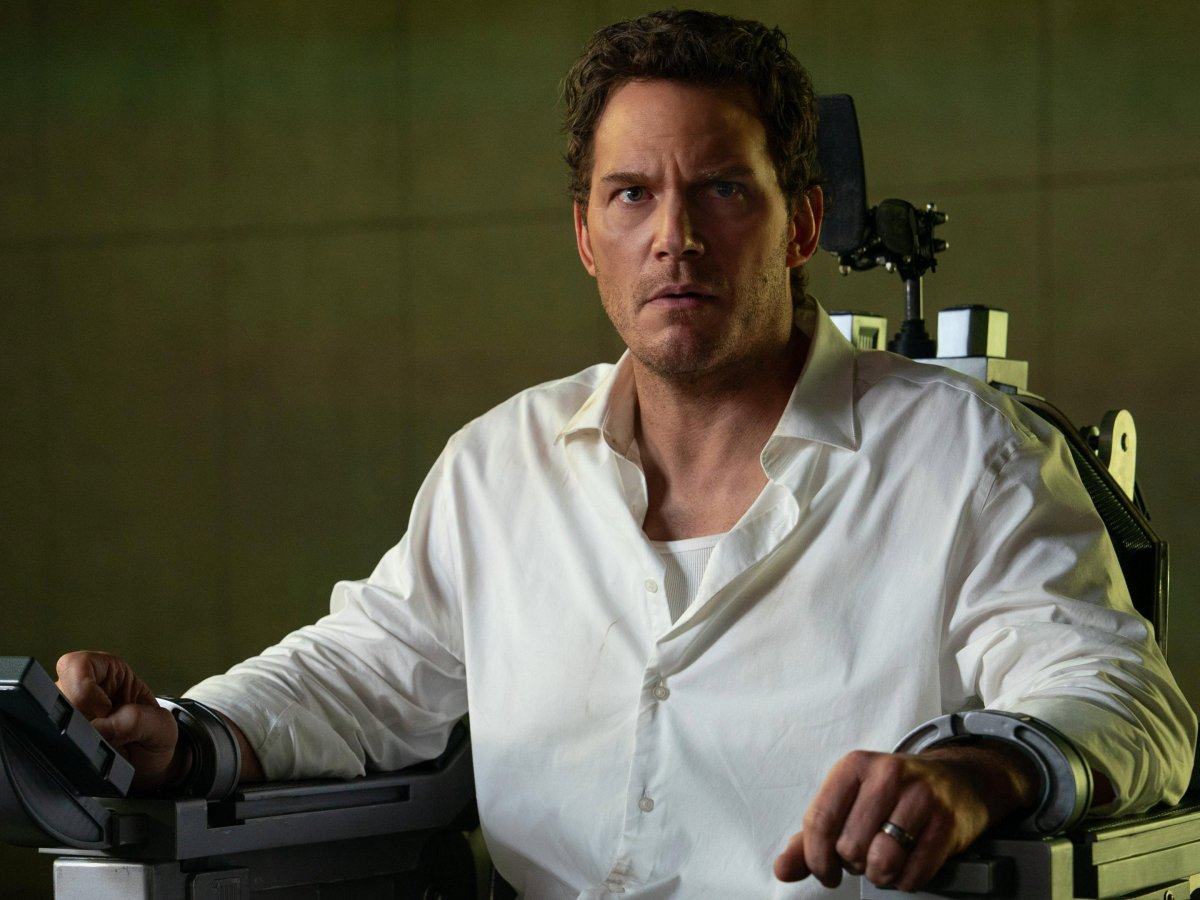
Bugonia centers on Teddy Gatz (Jesse Plemons), a beekeeper consumed by conspiracy theories and the belief that an alien race from Andromeda is preparing to invade Earth. He is joined by his cousin Don (Aidan Delbis), a character coded as autistic and portrayed with empathy and nuance rather than caricature. Delbis himself is autistic in real life, adding a layer of authenticity to the performance. Don loves Teddy unconditionally, and tragically that love is exploited by Teddy’s obsession, an experience that will resonate deeply with many autistic viewers, myself among them. Remarkably, this marks Delbis’s first acting role, yet he holds his own effortlessly alongside two of the finest actors working today.
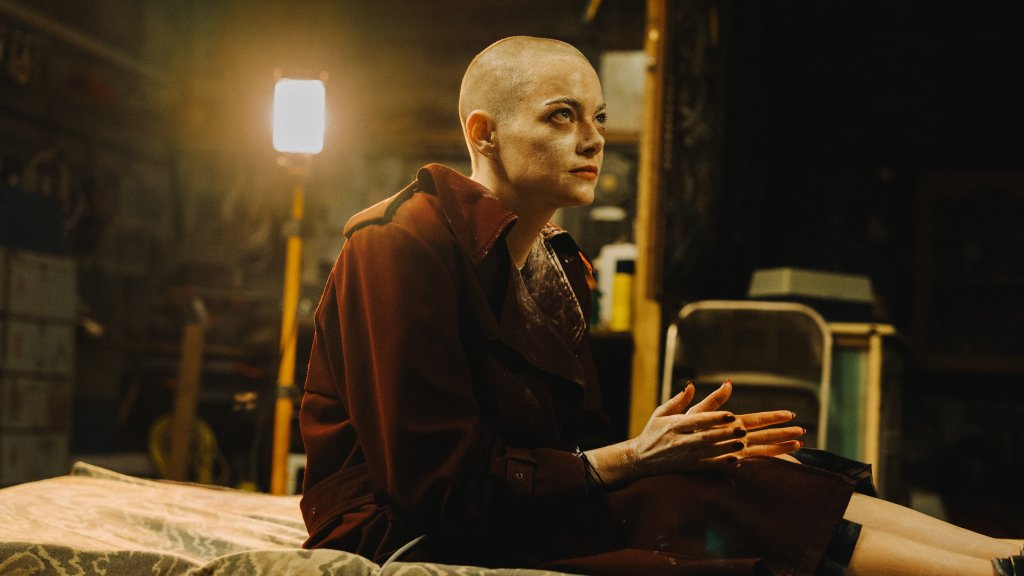
Teddy’s paranoia culminates in the kidnapping of Michelle Fuller (Emma Stone), a pharmaceutical CEO he believes to be an Andromedan in disguise. In one of the film’s most bizarrely funny sequences, Don shaves her head as Teddy insists her hair is a conduit for alien communication, and yes, that really happens. What follows is a darkly comic battle between logic and delusion, Michelle’s calm insistence on reason colliding with Teddy’s unshakable belief in his cosmic fantasy.
There is also a moment in which a character’s sudden medical crisis is treated with the same deadpan logic that pervades the rest of the film. The flatlining sound elicited a laugh from me, a reaction that is rare and only works because of Lanthimos’s precise handling of timing, tone, and audience expectation. Scenes like this demonstrate his mastery of balancing shock, absurdity, and dark humour in a way that few directors could pull off.
The film’s strength lies squarely in its performances. Plemons, long known for his unnervingly soft-spoken intensity, renders Teddy both absurd and heartbreakingly human, a man so trapped within his own echo chamber that his certainty becomes tragic. Stone, meanwhile, takes on a different kind of challenge than in Poor Things. As Michelle, she embodies a corporate figure at a moment when CEOs have become cultural villains, yet Lanthimos and Stone elicit a surprising degree of sympathy for her ordeal. As the story unfolds, the audience is invited to question Teddy’s perceptions, and subtle visual and narrative hints create uncertainty about what is truly happening. Stone’s performance conveys both fear and power through nuanced visual cues, including moments in which her eyes are slightly exaggerated in a way that may or may not be intentional. Her work here is extraordinary and easily one of the year’s best.
Through Michelle’s captivity, we glimpse the pain fueling Teddy’s delusions, rooted in the trauma of his mother Sandy (Alicia Silverstone), left in a coma due to Michelle’s company. This is compounded by the implied sexual abuse he suffered at the hands of Casey (Stavros Halkias), a local police officer.
On the technical side, all of Lanthimos’s trademarks remain. Composer Jerskin Fendrix returns after Poor Things and Kinds of Kindness. For Bugonia, Lanthimos gave him only four words, “Bees, Basement, Spaceship, Emily-bald,” and no script. The last word refers to Emma Stone’s real first name, Emily. The resulting score feels peculiar, full of strange tonal shifts and sudden bursts of orchestral chaos that recall 2001: A Space Odyssey and Close Encounters of the Third Kind. Visually, Lanthimos and his regular cinematographer Robbie Ryan choose an unusual 1.50:1 aspect ratio. The film makes striking use of wide shots and the director’s trademark fisheye lenses. Characters often appear isolated within the frame, particularly in a dinner scene where the three main characters never share the same shot, emphasizing their fractured worldviews. Lanthimos frequently employs the rule of thirds, placing the action in the middle third of the frame and leaving the sides barren, creating an unsettling and deliberately alien atmosphere.
The title Bugonia refers to an ancient Mediterranean ritual in which bees were believed to spontaneously generate from a cow’s carcass. Although Lanthimos did not write the script, it is easy to imagine the Greek filmmaker recognizing the symbolism in this myth, which is described in the Geoponica, a tenth-century Byzantine collection of agricultural lore. The process mirrors the film’s themes of decay, rebirth, and the strange beauty that can emerge from corruption.
Bugonia will not be for everyone. Lanthimos has always been drawn to the unsettling and the absurd, and here he explores both with a sharper intimacy than before. His shocks arrive not for provocation but for revelation, forcing us to confront the loneliness, control, and delusion that define his characters. It is a film that bridges his Greek roots and his English-language evolution, merging the raw psychological intensity of Dogtooth with the ornate moral ambiguity of Poor Things. For those attuned to Lanthimos’s peculiar rhythms, Bugonia is a haunting, darkly hilarious meditation on what it means to believe in something, no matter how impossible it sounds.
Watch the trailer right here.
All images via Focus Features.
Directed by Yorgos Lanthimos
Screenplay by Will Tracy, from the film Save the Green Planet! directed by Jang Joon-hwan
Produced by Ed Guiney, Andrew Lowe, Yorgos Lanthimos, Emma Stone, Ari Aster, Lars Knudsen, Miky Lee
Starring Emma Stone, Jesse Plemons, Aidan Delbis, Stavros Halkias, Alicia Silverstone
Premiere Date: August 28, 2025 (Venice)
Running Time: 118 minutes


 Cinema from the Spectrum
Leave a comment