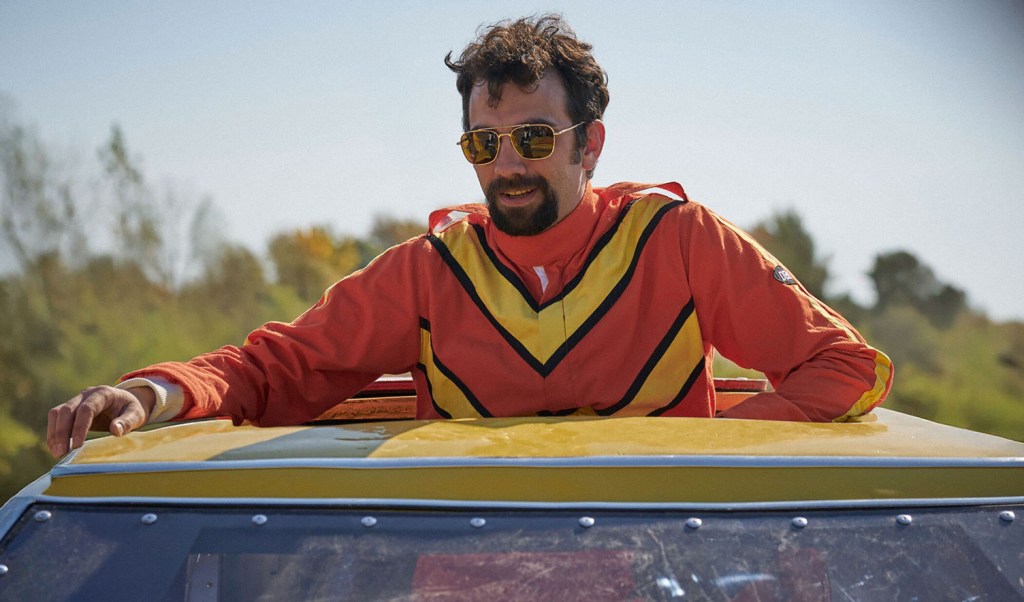

Dreams are a funny thing. They can be as simple as moving to the city or as grand as having fame and fortune. But what all our dreams have in common is the drive to achieve them. Some people will pay the cost, even if the price is sanity. In the film, the stunt driver Ken Carter shows us the cost of him giving up his dream with his relentless pursuit and death defying bravery to become a stuntman.
Like many moviegoers, this film was my first introduction to the legendary stunt driver. The Stunt Driver brings audiences up to speed showing Carter’s journey from his humble origin to his death defying achievements. Ken Carter is depicted throughout the film as an adrenaline junkie that gets a thrill out of these death-defying stunts; everything else in his life including his family becomes secondary to him.
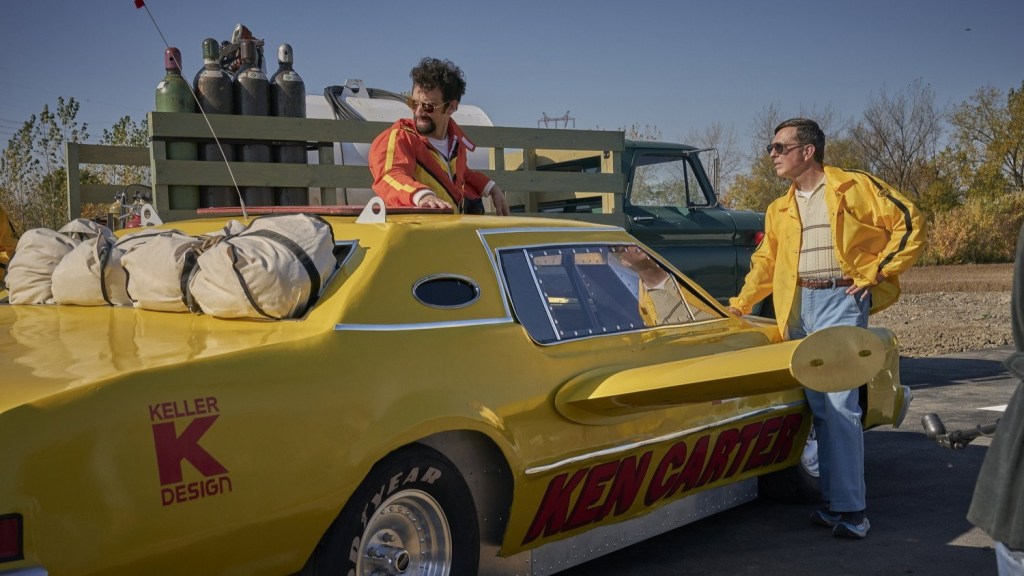
Starring as Carter, Jay Baruchel plays the role with vulnerability but also utilizes the uniqueness of Ken Carter’s personal life to give the film a hefty dose of comedic flair. Carter’s life is constantly bouncing around school to school before eventually dropping out. The one aspect of his life that matters is becoming a professional stunt driver with the ultimate goal: to jump over the Saint Lawrence river.
The absurdity of the film’s premise makes The Stunt Driver a tough sell. Thankfully, director Michael Dowse skillfully weaves a compelling tale. By inter-cutting archival footage with stunt recreations Dowse brings energy to the film. Mixing fiction with reality provided the film a solid structure for audiences to latch on to. There’s even a point in the film where his stunts get Evel Knievel to notice him. This begins a rivalry that starts Ken Carter’s pursuit of wanting to launch his car across the St Lawrence river. The film’s greatest success lies in how it demonstrates the tunnel vision that can occur when you become fixated towards a particular goal, even if that path leads to one’s own destruction.The escalation of his stunts throughout his career causes him to cast others aside as he alienates himself in favour of his obsession. Nothing will come between him and his dream. You almost get the sense that this pursuit is attempting to fill a void and, in the attempt to put something there, that emptiness can no longer be felt.
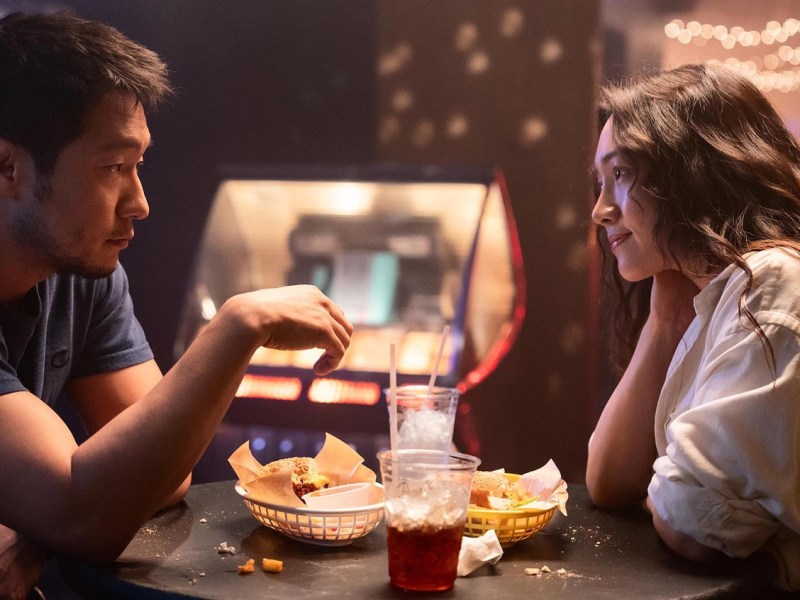
While the film draws heavily on comedic elements, the relationship between Ken Carter and his girlfriend, Gloria is often cast to the side. You can feel a palpable tension within the film that ultimately leads to nowhere. She shows up enough at the beginning but as the film goes on she feels pushed to the side. The film’s waning interest in this relationship often feels disinterested and hollow as a result.
Maybe it’s done intentionally, but I didn’t feel much of a connection between them and wished the film developed that dynamic better. One could say that he pushed her away because the stunts became the only aspect of his life that he had control over, even if it meant his untimely end.
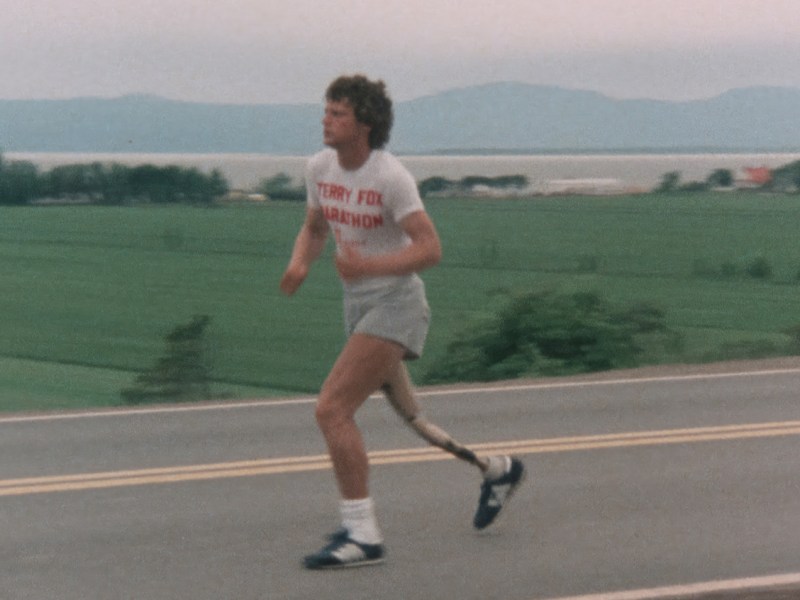
Ultimately, The Stunt Driver does justice to its uniquely Canadian tale. The cinematography often matches the look of the archival footage to the point where both types of footage are mixed and remixed together. Michael Dowse utilizes the mixing and remixing of both footage types to examine what. The footage does much to resemble the film stocks not just in how faces are captured but how environmental details come through. Although this film is clearly shot digitally a lot of work has gone on to match the footage from which this face is based on. The importance of the cinematography is crucial because not only do you have to sell the period in which this film is set, you also have to inform audiences who may not be aware of who Ken Carter is. With great production design to accompany the film and recreate the 70s, the audience is firmly planted within this time period, and with the reminder through archival footage, the authenticity becomes evident.
The Stunt Driver is a uniquely Canadian story about an adrenaline junkie turned stunt driver chasing a dream that many would call crazy. By revolving around a Quebec native and having a Canadian in Jay Baruchel portray him and Michael Dowse shepherd it, one can’t help but feel they are watching something special. The film is both confident in its visuals and its filmmaking in being able to nab credible actors such as Ed Helms and Ben Foster to round out an already large ensemble. The more Canadian films carve out an identity for themselves the better off our tiny little industry will be.
When we control our own stories, that’s power not only in establishing our voice but offering something other than being just a substitute for American cities. Our stories can be enough and they deserve to be shot where they originated.
Watch the trailer right here.
All images via Mongrel Media.
Directed by Michael Dowse
Screenplay by Michael Dowse
Produced by Jennifer Wilson, Michael Dowse, Macdara Kelleher, Eoin Egan
Starring Jay Baruchel, Ed Helms, Ben Foster, Laurence Laboeuf, Dan Bakkedahl
Premiere Date: September 11, 2026 (Toronto)
Running Time: 99 minutes



Leave a Reply