
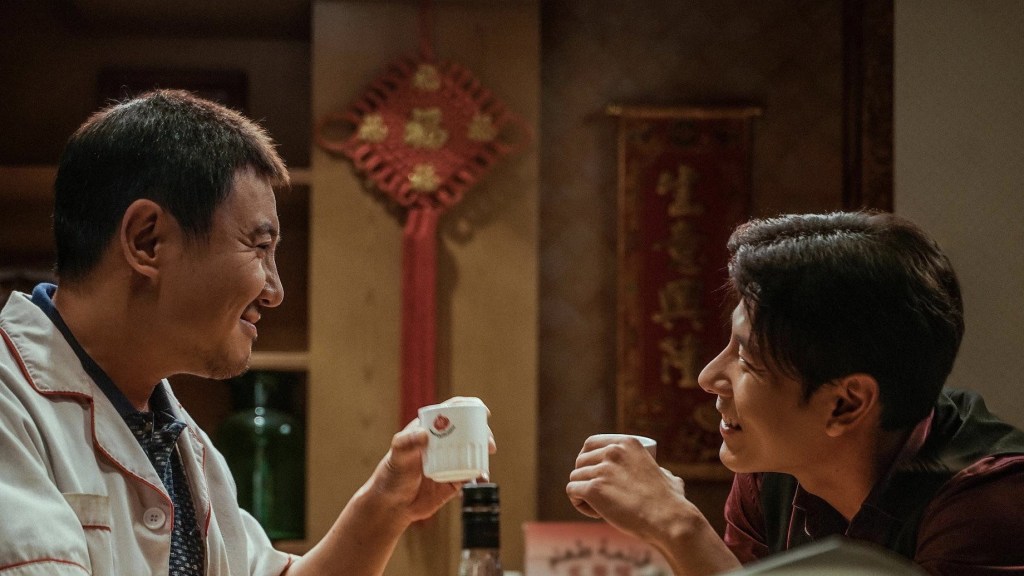

In its native Mandarin, this film is known as Welcome to the Loong Restaurant. In a way, it feels more emblematic of the attitudes toward the Iraq War from a side that’s neither American nor Arab, but the direct referencing of the Middle East evokes a feeling of dread. After all, this is a movie made about the state of life ever since the United States had declared a “global war on terror” following the September 11 attacks, especially from an outsider perspective. To that end, it’s where Wen Muye’s angle with making Once Upon a Time in the Middle East might ring with poignancy, because this is a film all about ordinary people making the best of dire circumstances.
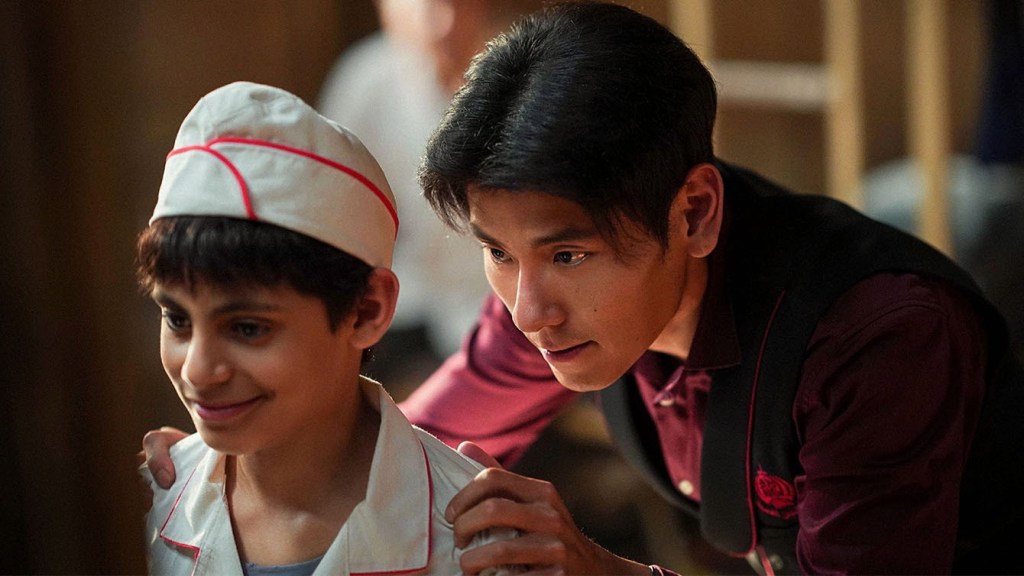
Our protagonist is Xu Fu (Shen Teng), a Chinese chef who moves to the fictional city of Bahata (the country is not named) in order to pay his debts. Over there, he becomes the head chef of the Loong Restaurant, and takes kindly to the community it builds. After having grown accustomed to a new land and finding people whom he had grown attached to, everything suddenly shatters as United States troops start to appear in the area, as the country has now entered a war. By nature of being within a war zone, Xu Fu finds himself an unwilling participant – because he’s in this space as an outsider. To be dragged into this circumstance is just overwhelming, but it’s also a key aspect of what Wen Muye wants to nail down in this film.
To a certain point, you have to distance the roots of Once Upon a Time in the Middle East from reality – which is best exemplified in the fact that this film is set in a fictional country. It’s not named, but one could easily identify it as being Iraq. The notion of American interventionism will always be within our subconscious, especially with this setting, but it’s also how Wen Muye manages to pull you into this world with relative ease. In light of several American movies that have been made about the Gulf War or in the wake of the Global War on Terror, seeing a film from the perspective of ordinary civilians would be refreshing. Even more so is the fact that we’re seeing outsiders be dragged into a needless war, just by nature of being in the area.
So from there, Wen Muye manages to shift moods so seamlessly. One minute, you’re watching a movie all about how cooking can bring people together, especially when they all come from different walks of life. The people who frequent the Loong Restaurant include but aren’t limited to Chinese, Arab, and American patrons – and that sense of pride in what Xu Fu has accomplished is felt. The next moment, you’re seeing something more intense, especially as violence surrounds these people who have been able to build something together simply out of love. It’s jarring, but perhaps that’s the best way to capture what it felt like to be in the midst of a war. And from there, it only gets more intense, especially as Xu Fu doesn’t wish to take a side, for he doesn’t see things so black-and-white.
Alas, this might be a potential failing for Once Upon a Time in the Middle East, only because it seems to circle back to a familia hackneyed message. War is bad, we’ve seen several anti-war films throughout history circulate this message. Knowing the circumstances in the United States right now, as they prepare to enter a forever war with Iran, the kind of optimism we’re seeing here might even ring naive. It’s easy enough to admire the intentions behind this story, especially if it helps humanize those whose perspectives have hardly ever been present in such films. Understandably, Wen Muye wouldn’t want Xu Fu to take either the American side or the Middle Eastern side during the war – though this sort of mediation doesn’t ring with conviction if it all centers back to a familiar sentiment.
Nonetheless, it’s an agreeable one. For as much as he can, Wen Muye wants to take delight in the concept of community, especially as this is a film all about civilians celebrating something that they can create together, despite trying times. With the Middle Eastern setting, it all seems to be very dicey, but there’s an earnestness in how this film engages with how ordinary people try to keep their spirits up during the war. Appropriately, the moments of violence end up feeling more visceral, given that Once Upon a Time in the Middle East doesn’t ever side with seeing such people as either “hero” or “terrorist.” They’re just people trying to get on by, even if it means that there will be death surrounding them at every corner.
Watch the trailer right here.
All images via Well Go USA.
Directed by Wen Muye
Screenplay by Wen Muye, Lang Qunli, Wei Zhong
Produced by Ning Hao, Mohamed Osama
Starring Shen Teng, Jiang Qiming
Premiere Date: August 11, 2026
Running Time: 140 minutes






Leave a Reply