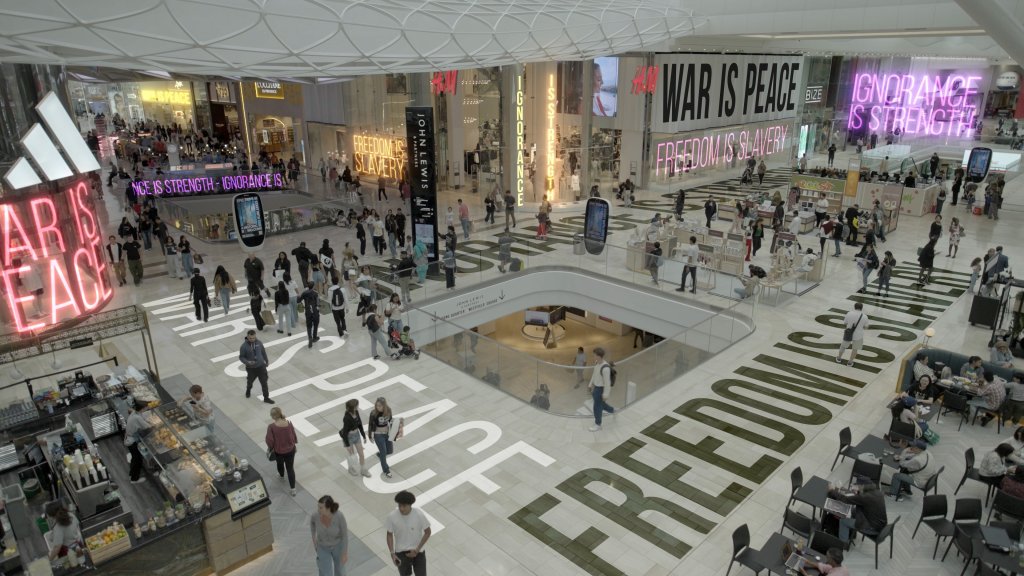

When right-wing politicians today invoke George Orwell’s Nineteen Eighty-Four to claim censorship for their opposition, you can’t help but feel like they’ve never understood the source material. Orwell made it no secret that he was a socialist who opposed censorship that was enacted on by governments in order to demand compliance from its citizens. But there’s never any moment in time when such people who invoke Orwell’s words to criticize left-wing leaders end up actually quoting the book, let alone Orwell himself. It’s enough to incentivize someone like Raoul Peck to create the rebuttal to such voices, which Orwell: 2+2=5 does, while also reminding the viewers to read Nineteen Eighty-Four before they find themselves swayed by selected passages invoked out of context.
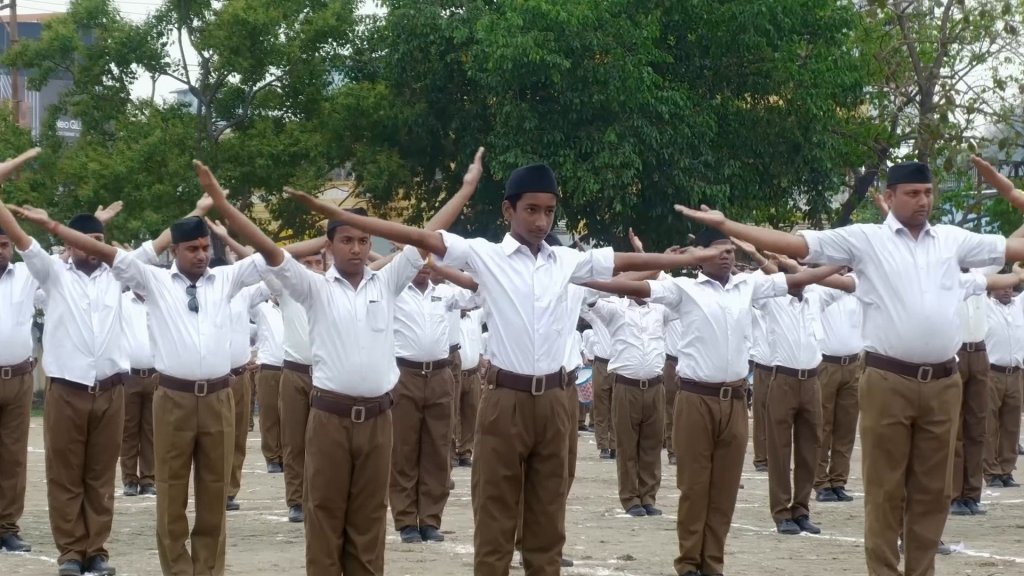
This of course is where a firm thesis is planted by Raoul Peck: hammering down on a point made in George Orwell’s Nineteen Eighty-Four, where a falsehood becomes rendered into “truth” by the nature of an authoritarian government, much like the one dominated by Big Brother in the iconic text. But perhaps that’s also where Raoul Peck finds a very firm ground to work with, especially as right-wing figureheads appropriate the texts of Nineteen Eighty-Four in order to bemoan “wokeness” and any left-wing principle that would jeopardize their influence. It’s all very frightening, especially when Orwell believed that censorship is a key principle of authoritarianism, as the world he’d envisioned in his iconic novel would have brought forth.
Many very relevant talking points are hit in here, down to the fact that right-wing figureheads have created a form of doublespeak, as hinted at in Nineteen Eighty-Four to shut down dissenting voices. With the rising prevalence of such terms like “wokeness,” “critical race theory,” “cultural Marxism,” or “virtue signalling,” we’re seeing Peck assert that Orwell would indeed be bemoaning the worlds that right-wing leaders would want for the citizens whom they desire to rule over. Peck keeps all of this very current, particularly in a segment targeting well-intentioned liberals end up falling for the same right-wing lies; a perfect modern example being the term “antisemitism” getting hijacked by Zionists in order to silence critics of Israel and their genocide of Palestinian people. Peck finds himself in such a position where he’s trying to question why we’ve allowed ourselves to come to this point where Nineteen Eighty-Four remains ever so relevant.
Unfortunately, it seems like that’s where most of Peck’s thesis lies. The film mostly falls through as it’s never seeming like it brings up anything new for Orwell readers. This all mostly seems very obvious to such people, especially if you’ve read Animal Farm. It’s easy enough to understand why Peck would want to hammer down Nineteen Eighty-Four given the fact that said book has remained a point of reference for many in the present. Still, much of this disappointment can come from the fact that it’s not the only one of Orwell’s novels that had cemented the author’s iconic stature, let alone his own political convictions. Given that Peck was willing to dissecting the life of James Baldwin in congruence with an unfinished manuscript in I Am Not Your Negro, it feels mostly disappointing to see that he’s not doing the same for George Orwell. Baldwin’s ideology feels like it ties perfectly with the sort of literature he was known for, but Orwell is never given that same treatment.
And instead, it mostly seems to fall on a very obvious point, before repeating itself nonstop. Perhaps the most telling thing though about Orwell: 2+2=5, is that we know which side of the modern day political divide will be watching this film and who will not. Those who’ve read Orwell’s work through the years will obviously be coming back to his books as a result of this film, but it’s not going to feel particularly revelatory. Those who simply invoke Orwell without any consideration for his actual political convictions are not ever going to watch this movie. It’s mostly disappointing, because you can’t help but feel as if there’s something much stronger and much more firm that could have come out of this, all things considered. But that’s not what Raoul Peck does here, very disappointingly.
Watch the trailer right here.
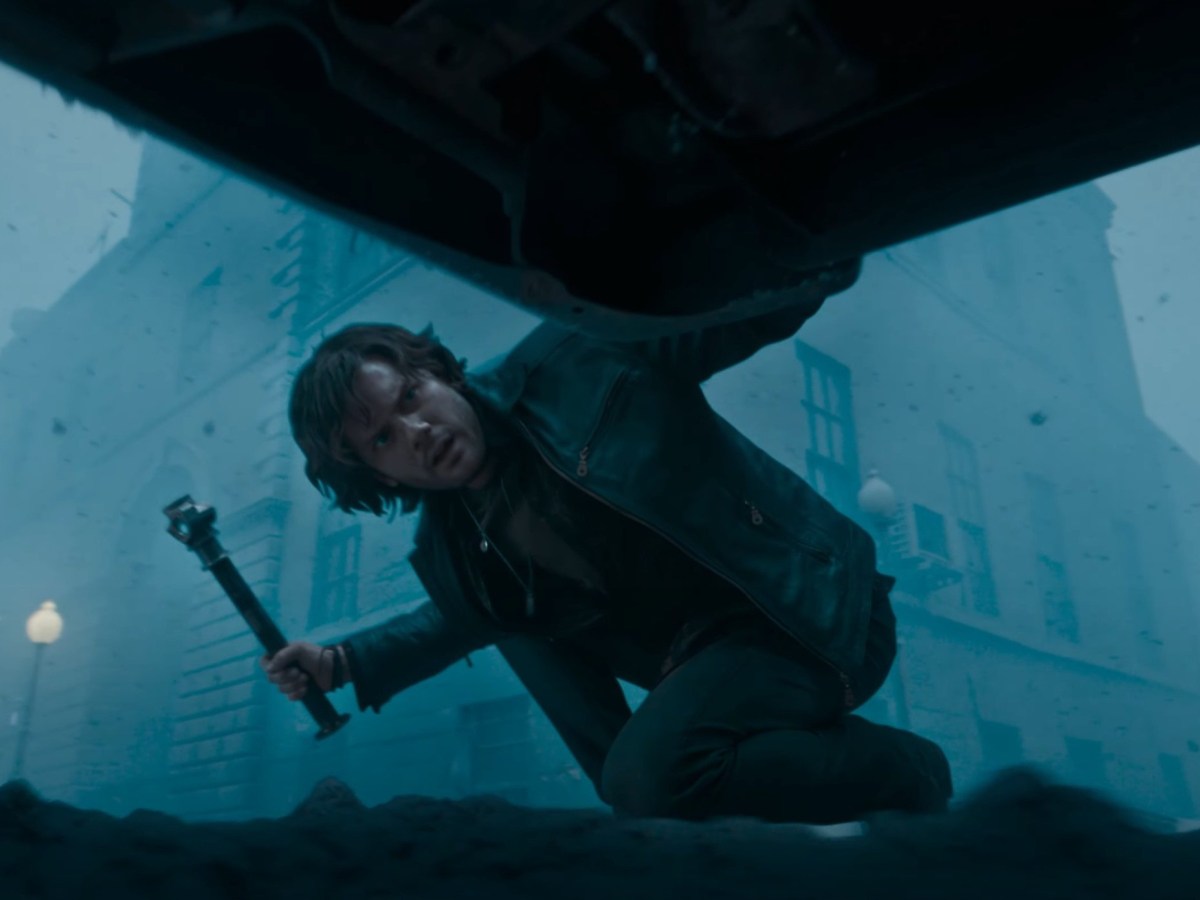
All images via NEON.
Directed by Raoul Peck
Produced by Raoul Peck, Alex Gibney, Nick Shumaker
Featuring Damian Lewis, Alexandra Strauss
Premiere Date: May 17, 2025 (Cannes)
Running Time: 119 minutes




 Cinema from the Spectrum
Leave a reply to Daily Digest Archive 2025-10-19 – Press Services Cancel reply