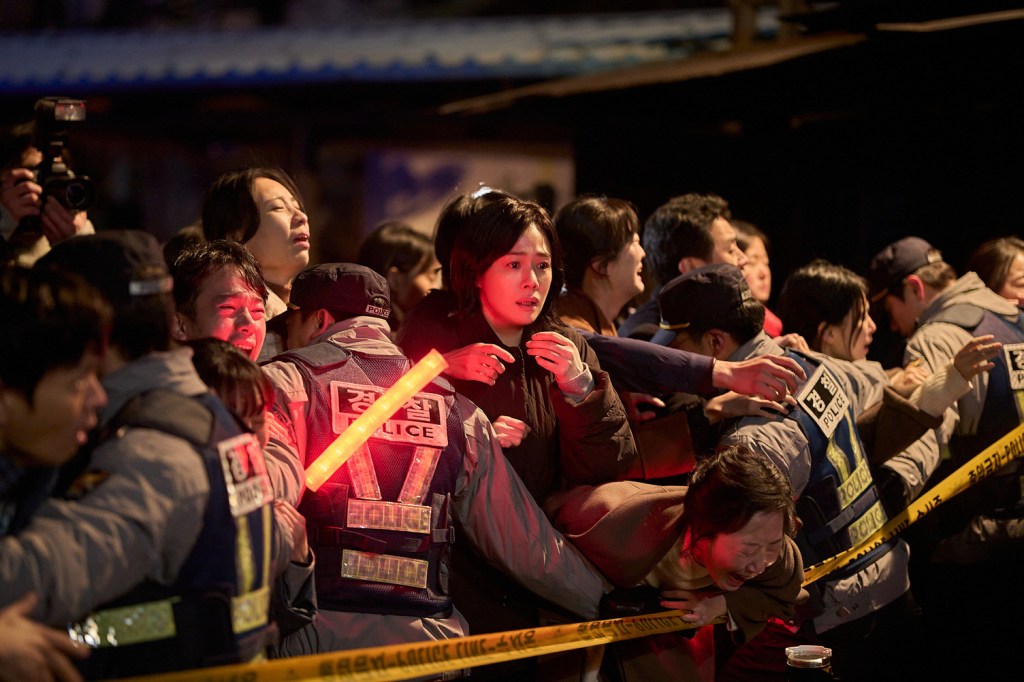

There’s a great case to be made for a film like Paradise Lost being made around now, given the prevalence of AI in our daily lives, whether we like it or not. You can count on Yeon Sang-ho to shine a light on the ugliness it inspires, as he’s never been one to shy away from the internalized monsters in films like The Ugly or the animated The King of Pigs. With Paradise Lost, you know where Yeon Sang-ho stands on this overdependence on AI because it’s not particularly subtle about it. Sadly, it seems that everything that would make Paradise Lost provocative from off the bat is undercut by relentless nihilism to the point that its own message comes off incoherent.
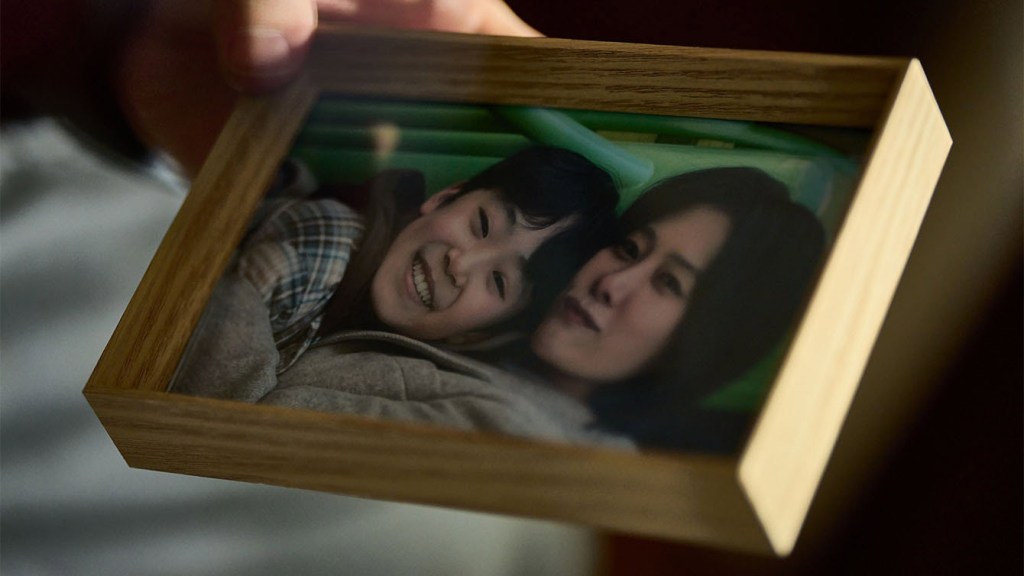
Everything in Paradise Lost is kicked off by a bus full of schoolchildren mysteriously vanishing on the way to a camp. When the bus driver is the only person found, he becomes the primary suspect in the children’s disappearances as several children’s dead bodies are discovered. This is where we enter the life of Ryu So-young (Kim Hyun-joo), a mother whose son Sun-woo was one of the passengers on this bus. In her grief, she turns to an AI company to recreate a likeness of her child, as if Sun-woo had never disappeared. All seems perfect until Sun-woo (Bae Hyun-sung) appears nine years later, but not as the same innocent child that she perceived. It would seem as if Yeon Sang-ho wanted to interrogate the ethics of using AI to resurrect a dead person’s consciousness, as the artificial reality that So-young has created is shattered. Unfortunately, you also sense that’s where the film falls on itself, too.
From reading the premise, one could think back to a film like Atom Egoyan’s The Sweet Hereafter in how it observes the collective grieving of an entire town after their children’s lives were claimed in a bus accident. Yet Yeon Sang-ho’s commitment to delivering a high concept is where Paradise Lost suffers greatly, because it seems as if his focus lies more within the hammering down that artifice is not an appropriate response for grieving. After all, the same child that So-young had sent on that school bus to go to camp is dead, and she’s left with a monster that no longer corresponds with the ChatGPT-ed world she created. It’s interesting in theory, but as Yeon Sang-ho continuously tortures So-young over the course of the movie, he traffics in cynicism that never goes anywhere.
Not once does it ever cross the minds of any character here to hold the AI companies accountable for letting So-young sink so far into delusion. In fact, it would seem as if rationale is all but thrown out the window here, because Yeon Sang-ho believes that everyone in his film is beyond help. It seems insulting enough that she’s characterized as a mother unable to properly grieve, so the sight of her real son being monstrous is something she can’t accept, let alone live with. And given the many horrible things that she sees being committed by his own hands, it seems strange enough that no one would question why it all ties back to her. After all, you sense that Yeon Sang-ho believes he’s saying something about the dangers of unregulated AI prevalence. Yet, it also comes at the cost of any rationale, particularly when he hammers down the violence he believes exists within humanity.
The closest that Yeon Sang-ho gets to achieving the provocations he wishes to invoke from this premise is the virtual reality that this AI company creates for parents to interact with artificial versions of their children. It all seems so grotesque, given that we’re seeing programmed versions of these children slowly “disappear” as if they were characters in a video game. Even the idea that this world is visible through the augmented reality glasses created by the company invokes Meta’s AI glasses, for the worlds that their users create seem too good to be true. Unfortunately, there’s never enough time spent with these concepts for us to really think about their greater ramifications. Surely enough, it wishes to hammer down this angle about generative AI being capable of systemic harm, but that’s not enough to create anything incisive.
And then there’s the way this film ends. Like The Ugly before it, you sense here that this is where Yeon Sang-ho wants to achieve a sense of profundity. Yet, it’s also just so inane that you only find yourself horrified by the end result. Horrified, not for humanity’s sake as Yeon Sang-ho would intend. It’s just stunning that this was the route that he chose to end, because it ultimately muddies what he thinks he was saying about the prevalence of artificial intelligence in general. From starting off as a film that’s against the proliferation of artificial intelligence and its presence in our daily lives, this ending shows he’s opting for the centrist response – and he really fumbles his way to that point. If it weren’t for Kim Hyun-joo, this wouldn’t have anything else going for it. If only Yeon Sang-ho had anything coherent to deliver in the end.
Watch the trailer right here.
All images via Well Go USA.
Directed by Yeon Sang-ho
Screenplay by Yeon Sang-ho, Ryu Yong-jae, from the novel Black Inferno by Oh Seong-eun
Produced by Yoo-min Hailey Yang
Starring Kim Hyun-joo, Bae Hyun-sung
Premiere Date: September 13, 2026 (Toronto)
Running Time: 101 minutes
Other Writers Say…
Nathan Sherwood
The film offers themes of trauma that we’ve seen others done better and tries to be two genres mixed into one. While the first half of the film is intriguing, it fails to continue that momentum and instead deliver an underwhelming narrative with too many flaws.


Leave a Reply