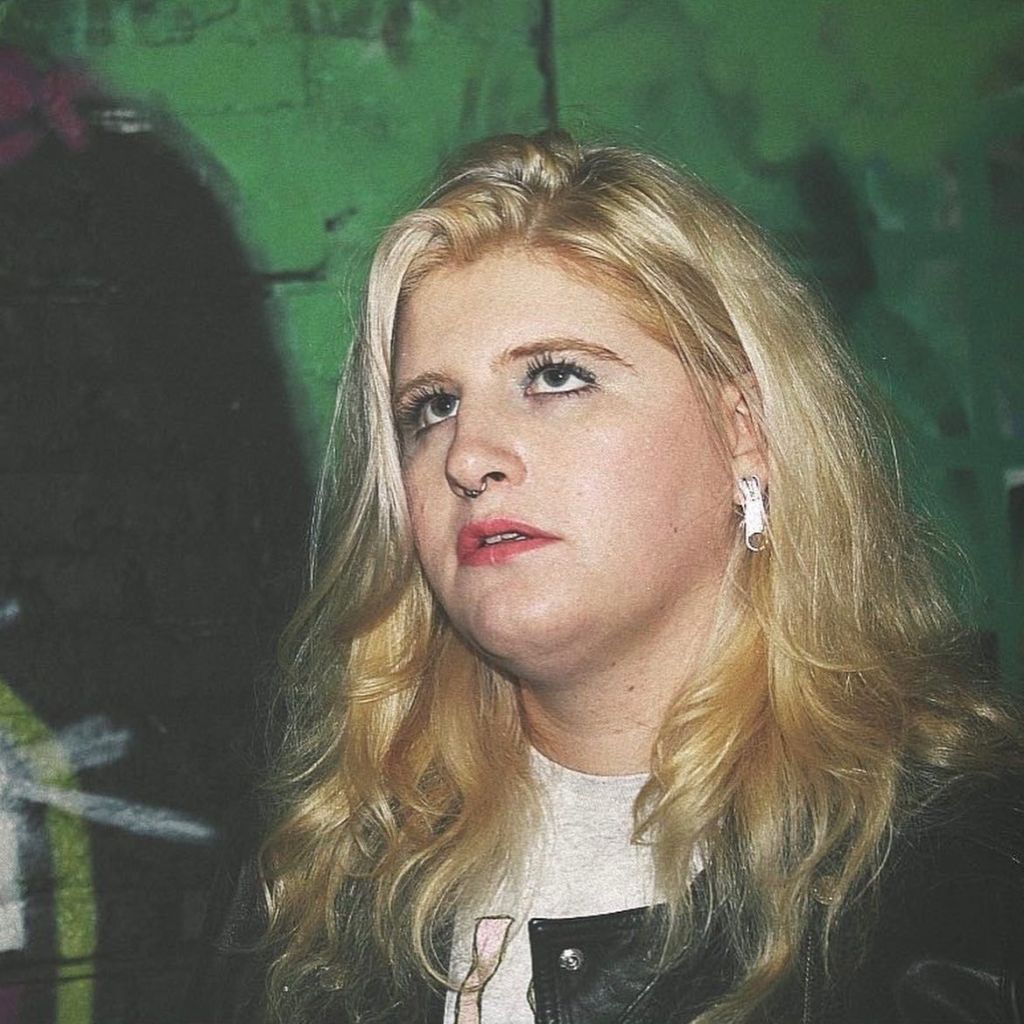

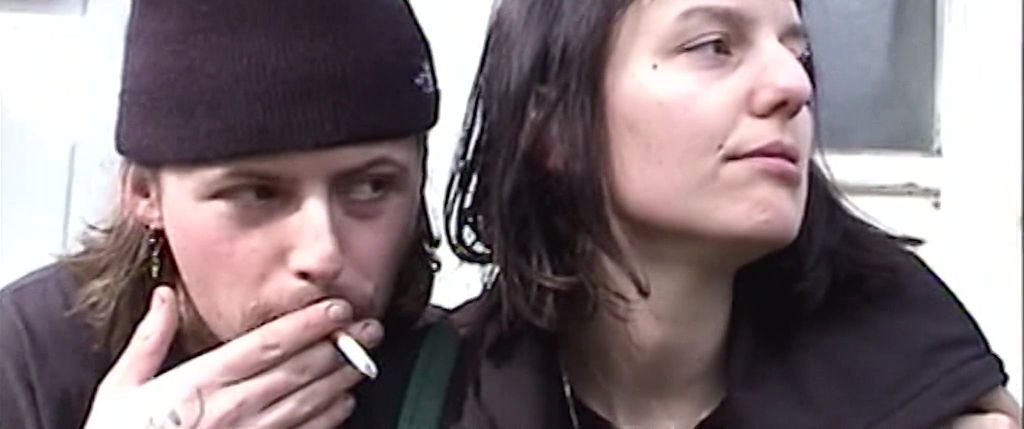
For this year’s edition of the Fantasia Film Festival, I was granted the opportunity to speak with filmmakers Louise Weard and Avalon Fast about Castration Movie Chapter iii.ii Junior Ghosts—Premorphic Drift; a fragmentary passage, the newest chapter in Weard’s ongoing Castration Movie Anthology. With this only being one chapter in a longer piece, I felt this was the perfect opportunity to dig into a distinctly unique creative process, especially for an ambitious ongoing project like Castration Movie. Below is our conversation, which has been edited for clarity.
Jaime Rebanal: I’ve been following your journey with Castration Movie all the way to now. And with this new segment, can you talk about what goes through your mind coming up with each new segment?
Louise Weard: I think that these movies are kind of like an amazing experiment in self-harm. Like there, there’s a degree when I plan these out, where one there’s a level where I kind of want to, I think more than anything, it’s I want to scare myself. I want to push back, like push myself to do something that feels irresponsible, that makes me feel uncomfortable. Whether that’s like with the character I’m playing, where I’m like, “Oh, can I dress her even stupider? Can I make her like worse in some way, where I feel feel bad playing the character?” And in a way that will push me to performing something that brings some degree of truth, where I keep pushing that character further and further from myself in a lot of ways. But then it points a mirror back at your like the things you’re hiding.
Avalon Fast: Do you think it keeps you grounded?
LW: Yes, it does. It’s like creating a tulpa, like an evil tulpa. Like that’s actually it. It’s like these movies are my therapy. I was gonna be where I’m just channeling everything into these films in a way where it’s not like autobiography. It’s more like psychoanalysis, right? Just like what might be happening. It’s like trying. Say I’m making the movie. Yeah, like I’ve made the joke. Like these movies are just a project of me trying to figure out why I’m like this. And so every character in some way is a reflection of that psyche and these voices in my head that are you know giving me all the bad feelings, or whatever. Then I make my one of my best friends have to say these horrible things, and then we can unpack them together. So basically, I’m paying all my friends to be my therapist. Yeah, that’s what’s going on.
AF: That’s what’s happening right now.
LW: Yeah, I think, but like for this new Castration Movie, for example, it was like, you know, we’ve already covered like incel character, right-wing trans woman, detransitioner, TERF was like the next big one, right? Like we when I wrote all them down, it was like a list. It was like Kill Bill, and I’m crossing them off. All these like characters that I was like scared to make a movie about, and it really was for this one. It was it took the most prep time, because I had to think, how can I write a story for this chapter that gets me into the headspace of this character of Izzy and not celebrate what she’s doing, but understand what she’s doing? You know, like I never want the there to be too much of a gap in the empathy where up until that final line you can kind of see her side of it. I think, which was which was a balance I was really trying to hit for sure.
JR: I think you do it really successfully. And even with all the stuff that Izzy does on Mumsnet on that note.
AF: I didn’t know what Mumsnet was.
LW: Yeah, I told Avalon, “You’re gonna click to the second page. You’re gonna click on Mumsnet.”
AF: And I’m like, “What?”
LW: Then you’re going to just scroll through this article that pops up, and I was like, “But don’t read it.” And I want to ask Avalon something quick, do you understand why everyone laughs so hard in the theater when you click on the Mumsnet thing? Do you even understand it yet?
AF: Well, it’s an online space reserved for TERF ideology. So is there something else?
LW: Did it surprise you that something you hadn’t really heard of gets that big?
AF: You know, honestly, no, because of the way that I know you make movies. Of course, it’s always cool to hear the moments that people are getting enjoyment out of. But I wasn’t surprised. I was like, “I suddenly feel like I do understand this thing entirely” just from that reaction. It was very quick, this is something that’s been around for a long time. Something maybe you go and look at just to see what kind of evil shit is being said on here.
LW: 100%. And what I love about it is that it is such a turning point in the story, where the online radicalization starts. It’s this quick little moment. And every time we show Mumsnet in the theater, someone yells “NO!”
JR: I really wish I was there in Montreal to watch it with you all. That leaves me with a question for Avalon, because your character Izzy, you’re playing somebody who is basically a gatekeeping trans woman, and I want to know what it was like getting into that mindset.
AF: I’ve been talking about this a little bit, and I felt that it was necessary for me to speak about how difficult it was to emotionally prepare for this role, or to decompress after I played the role. But to be honest, because you know all this TERF shit means nothing to me, and you know it just doesn’t. There’s no, yeah, it’s not that deep, right? For me, it was just like a funny thing to like experiment with in this role and learn about you know through what Louise is telling me. But yeah, I did know I did no research.
LW: I did not make you go method for this.
AF: No. And I wouldn’t know, right?
LW: Izzy only existed when the camera came on and when the camera came off. Which speaks to how talented Avalon is as an actress and like you know, as a director, it’s not really fun to teach people horrible new words where you’re like, “Oh, here’s some anti-trans ideology for you.” So what we did was we really tried to I’d be like hit this line, hit this point, but we didn’t sit around unpacking the meaning of it or anything. It wasn’t necessary.
AF: Yeah, to get to those very dark emotional places, it was more about looking at the end of a relationship, feeling betrayed, like you don’t understand who your partner is, you’ve had the wool pulled over your eyes. Which can apply to so many real you know scenarios between couples in relationships. So it was less so for me. Any that I did would just be yeah with Henry learning how to get to those places or preparing to go there.
LW: Yeah, well, and I wanted to tell the story that’s about how someone goes from what we consider normal to a bigot, right? And it’s like this for this story we’re telling. It’s this character who projects these feelings that they already have about their partner and about men in general, and ends up putting them onto trans women as a concept because it’s easier than reflecting inwards and thinking about the actual dynamics at play in their relationship. So throughout this movie, we’re always trying to lay those seeds for the audience to hopefully think, “how are we seeing Izzy get from point A to point B here?” And I think it is a pretty realistic moment where we see this all the time with people online who are famous artists or authors who start with the you know level of “I don’t hate all trans people. I just hate this like sort of thing about it, or I’m projecting this sort of feeling I have. Oh, I’m afraid of men.” And then by the end of it, it’s like “I think trans kids should kill themselves,” and I think that that’s you know there’s a level by which watching a two-hour movie is cartoonish. But we’re doing this interview on like a day where like J.K. Rowling just posted like an upskirt photo of a trans woman on Twitter, and it’s just like you think about that. It’s like, did anyone think we would get there with her after she just asked questions in an essay four years ago? And it’s just like I think that putting that sort of pipeline into a movie also helps to make it more understandable for the people watching it who can go “oh like these people aren’t just crazy.” There’s some degree of real insecurity or fear or anxiety. It’s just they’re projecting it onto this innocent scapegoat because they can’t look inwardly at where their actual source of trauma is.
AF: Yeah, and they end up in like an echo chamber of just like really unintelligent people.
LW: Yes, that’s a big part of it.
AF: Something I was recognizing with the film last night. I realized the only intelligent person that my character speaks to in the entire film is Tiffany. Other than that, any of the resources or information I’m getting is all from you.
LW: Especially because it’s like everything has that level of baggage where it’s like you’re talking with your best friend and the best friend already didn’t like the partner.
AF: And the best friend already doesn’t like men and has had bad experiences in relationships.
LW: So you’re like, “Oh, well yeah. Well, of course the trans thing’s bad too. Because they’ve already just been unemployed or whatever. Everything starts being conflated with each other to the point where you start this movie where a couple is bickering about the coffee being spoiled. And by the end of it, Izzy’s ready to go marching for anti-trans rights, against trans rights or whatever. And I think that that’s a very interesting dynamic that we play with in this movie.
JR: That’s amazing. I’ve always wanted to know, Louise, how much of this all comes from personal experience, especially in the previous chapters?
LW: Well, the thing is, none of these movies are autobiography. Like any artist, I am capped. I’ll recognize moments that happen either in my life or in my relationship to art or anything like that. I’m the type of person who likes to hang around and get into a crazy situation. And then I’ll internalize what those feelings are and what the people acted like, and then I can kind of pull the vibe of that experience into my work. So nothing is a one to one recreation, but on an emotional level or on some sort of, like you know, sometimes I’ll hear someone say something so crazy. I’m like “I’m gonna write that down and make sure that goes in the movie.” So it’s I think the way a lot of artists work.
AF: I think so, yeah.
LW: But I like to think of Castration Movie as a movie really about modern existence in relation to the internet, and I use transness as a big part of that. Not just because that’s how I view the world as a trans woman, but also because I feel like there’s so much about trans identity that you can bat like use the internet as a context where it just makes perfect sense. Like there’s so much trans culture online because that’s how so many people connect with each other. And because of the way that trans online communities work, one of my favourite things to do is to make people say a lot of those things and have those conversations in the real world. And then you see this reflection of the internet in a way that’s very uncanny and weird and funny. Where it’s like hearing a trans woman in real life say some horrible word like some slang that should never be spoken in real life and should just stay on the internet or whatever. So that’s always been sort of a goal of mine is to make the internet real life with these movies. But I’ve never had a relationship with someone like Izzy in the sense of like I’ve never dated someone who is anti-trans. When I came out, I was in a relationship and my partner is extremely supportive. But it’s like I can understand what it’s like to be in a relationship that’s not working, or where I have trouble with my partner. Someone once asked me, if the relationship in Incel Superman was an homage to the relationship in Computer Hearts, my first film I made when I was 19, and I said to them, I was like, “well, it wasn’t an homage.” I was only really ever in one straight relationship, so that’s the relationship I’m going to keep drawing from for these movies. So it’s like obviously my relationship to the material is going to be shaped by my worldview, but it’s never you know, I’m never trying to do like auto fiction. I think that that’s like almost tacky in a way. Because I don’t consider myself to be a very interesting person, but I have very interesting things happen to me that I can filter.
AF: Yeah, making it more interesting.
LW: Yeah, exactly. That’s what movies are for. They’re the place of dreams. It’s beautiful.
JR: That’s a great way to look at it. And I imagine with the long running time of each Castration Movie chapter, you’re digging into these really uncomfortable spots for a lot of viewers. But I want to know, considering how much you consistently double down on these very uncomfortable spots, how you find all these new places to challenge yourself in the form, especially with what you’re working with?
LW: Well, it’s funny because I think during your question about what stuff actually feels the scariest to me in these movies, like in terms of like what’s the most challenging material for me as a viewer, as a filmmaker watching it, and I think that it extends to when I have to actually film these scenes. It’s so hard to sit in the room and have two of my friends have to be like non-trans people talking about trans people, like the scene of you (Avalon Fast) and Ivy.
AF: I’m glad you’re recognizing that because that was difficult. Yeah, I remember being very stressed. It was horrible.
LW: Or the scene with you and Tess in the new one. Just the way that these women are talking about trans women when there’s no trans women around is horrible. I think it’s the greatest act of violence I show in the movie.
AF: You know, all my trans friends are like in the periphery, just watching this happen in real time, right? Like that really has been for both of those scenarios. There’s just like the eyes of my beautiful trans friends watching me fumble through this shit in real time.
LW: Yeah. So like, I think that for me, those are like the most challenging scenes on an emotional basis. But in terms of the form, I think that it’s just we start with the baseline of what Castration Movie is, which is this very accessible type of filmmaking. The production value is extremely low. It’s shot on a handy cam. Anyone can pick up and make Castration Movie the same way we make Castration Movie. So then it becomes this creative thing where I have to go, “Okay, well, I’m you know Louise Weard. I am a singular like a singular art thing.” Castration Movie still can’t be something that anyone could have made, right? Like it still has to be a Louise Weard movie, even though the style is something that could be accessible to anyone on this planet, right? So I have to challenge myself formally and go, “Okay, well, we’re gonna do this split screen oner that we do in the second movie.” For example, I’m choreographing how we’re gonna have the camera switch subjects partway through, and I’m getting really excited about that. I’m like, “Okay, cool. We pulled that off. Now we have to keep going.” And then it’s like trying to figure out the next one, and the next one, and the next one. And so there’s stuff that we have planned for the upcoming Castration Movies that I won’t spoil here. But I’ll talk with my friends, and we come up with like crazy ideas on how to push the form forward. And I’m excited to you know always keep trying. I think that movies have been really stagnant for a while, like in terms of like what we would consider like main mainstream canonized cinema. Like the last ten years, I haven’t seen much growth. Kind of like, I love what A24 produces as a studio. But I feel like post-Moonlight we got kind of aesthetically stuck in something that people saw as something very perfect and wanted to emulate. And we’ve now just been reiterating on that for a very long time. So for me, Castration Movie is definitely like a rejection of these contemporary film modes that all feel so similar, where it’s either there’s such a look to modern independent film, there’s such a look to modern blockbuster studio filmmaking. So Castration Movie had to just embody the complete opposite of all of that, and after we’re done Castration Movie, we’ll have to do it all over again and do whatever the opposite of Castration Movie is. We’re always going to be pushing the medium as much as we can.
JR: Shunning the respectability politics.
LW: Exactly. Well, and what I gotta say is, like, it’s so nice getting to work with artists like Avalon, especially. Because when I watch Avalon’s movies, I get so profoundly jealous because Avalon is not adhering to that stock standard style of filmmaking. Avalon’s movies are just so visually beautiful. Creative, and so that means that since Avalon’s one of my friends and I’m so jealous of all of their work, I have to push myself that much harder. And I think we had a panel where it was us and Jane and Alice all talking, and we kind of hit that point of: the fact that we’re all friends and love each other’s work means that, like at least my experiences, every time I see one of them make a movie, I have to make sure I’m leveling up for the next the next time I end up on set. I have to I have to bring my A game next time.
AF: It’s funny because I do feel like right after making CAMP and then seeing what was going down with Castration Movie. And we’ve talked about this before. But Part Two, the similarities that Part Two have between Honeycomb and then seeing these films and being like, “Fuck, I miss doing shit like that, and then going drinking and driving.” There’s definitely like a through line to the inspiration, and yeah, it works both ways, right?
LW: Well, and it’s really funny because, like, before this call, Jaime, we were talking about how it’s like, oh, I don’t know if our movies have that much in common. But actually, they really do. We do have really similar sensibilities, and that’s probably why we’re such good friends. But we approach film so differently, and I think that that’s part of what makes our competitive spirit fun too? Because we’re always just like, “Okay, I’m gonna master this form or style or idea in a way that like you didn’t think of this angle, so I’m gonna try to do it differently or whatever.”
AF: I also feel like you have a similar thing that I do, where we get inspired by people we know personally, opposed to celebrity names in terms of who we’re going to cast in our films. So you’ll like have a friend that you’re starting to get to know. I’m thinking of Noah (Baker), for example. Yeah. The first one, or you see something and then you want to dig at it. You want to like explore this person.
LW: Well, and the thing is, it doesn’t always have to be someone who’s specifically right with you? I had that same the same thing I had for Noah that I had with Ivy Wolk, where it was just like, I need to work with you and make you the leading lady of my movie. Like I need Ivy Wolk to play the love interest of this movie because I see something in you that is inspiring me, and it starts. So, I wrote that character for Ivy right so it was like definitely in the same way I wrote that character in the first one for with and for Noah so we do get inspired by people.
JR: This is a perfect segue for my next question, because it’s something for the both of you. I wanted to note that since Jane Schoenbrun is in this chapter of Castration Movie, and I know that Jane has another movie coming out this summer. I want to know if you find that there are some overlaps between all your own creative processes in some ways.
LW: We all make movies so differently; it’s crazy. Having been in proximity to everyone on set, we are all vastly different.
AF: That’s so true. I would say that it is once you’ve seen the work itself and how it comes out. I think you can find you know more similarities too. But the way that we are personally on set, I don’t know if you’ve ever seen me on set. So, but I think I’ve seen all of I’ve seen you, I’ve seen Jane, I’ve seen Alice (Maio Mackay). Yeah, like strikingly different. But I do think for me specifically, there is a world that’s being lived in, maybe in Honeycomb and CAMP that I see connections to with I Saw the TV Glow and Camp Miasma and We’re All Going to the World’s Fair. Honestly, there’s something there in like the map of our movies that exist in the same place for sure.
LW: I mean, like I think that there’s a lot that can be said about all of us as like contemporary queer filmmakers. We’re gonna have similar themes and reflections of the world that are going to inherently come up in the work that we’re doing, because of a similar worldview, identity, whatever. But then it’s all about how we interpret those things into the work. Where you can see the themes are all kind of similar, but we have very, very different relationships to those themes and different outcomes for what happens with our characters and how they explored like what it means to be a person today. And I think that that’s like so beautiful. But it does mean that all of our movies make a great double bill. You could watch like CAMP and Junior Ghosts, which I have done before at Cecilia. And it’s like, “Oh, I can see similarities here of what it’s like to deal with like grief and violence and these things.” But there’s such different movies and different tones and all these things and I think that that’s like just so cool.
JR: That’s amazing. And this brings me into my last question, which is for Louise. You don’t have to say anything too much to this one, because this is only a fraction of the entirety of Castration Movie Anthology iii. Year of the Hyena. Can you say what else can we expect from the entirety of the piece?
LW: So, this is really fun. So we’ve been calling Junior Ghosts “Castration Movie 2.5.” Because the way that we originally planned it was we were shooting the Junior Ghosts, Polygon Heart Motor, and the next chapter, Chastity No Exit Virtue Cook all together.
AF: This is all brand new information to me.
LW: It’s been in the cutthroat, but we were shooting those three all at the same time. They were going to be one movie, but they got it got so long that we started start splitting them up. So now we are releasing each of those three chapters as they’re as a separate movie, so Polygon Heart Motor came out. Now Junior Ghost is coming out, and now Year of the Hyena, which has that next chapter will be coming out next year. But what I can give for a tease of what’s going to happen in the next film is that all of your friends from the first movie will come back. And you’re going to hate that that is the case is all I can really say.
JR: I’m getting really excited there.
LW: You’re going to you’re going to get back a lot of this cast you know and love, and you’re going to regret it immediately. So that’s the best thing I can say, and it is really funny because, responding to the reception, it’s really great. I have all the rest of the team here to ground me because I’m like, maybe we could add more nice moments and this and that, and then like someone like Aoife (Josie Clements) is like, no, infinite cruelty.
AF: I think there should be more nice moments.
LW: Okay, well let’s put some nice moments. Maybe our characters go golfing together.
JR: Even The Best of Both Worlds does have a few of those nice moments in between all the really dark places it goes.
LW: Yeah, Izzy and Michaela could be friends.
AF: That seems like a TERF-y thing to do.
Castration Movie Chapter iii.ii Junior Ghosts—Premorphic Drift; a fragmentary passage is currently playing at the Fantasia Film Festival.
Images provided by the Fantasia Film Festival.


Leave a Reply